The clownsbook
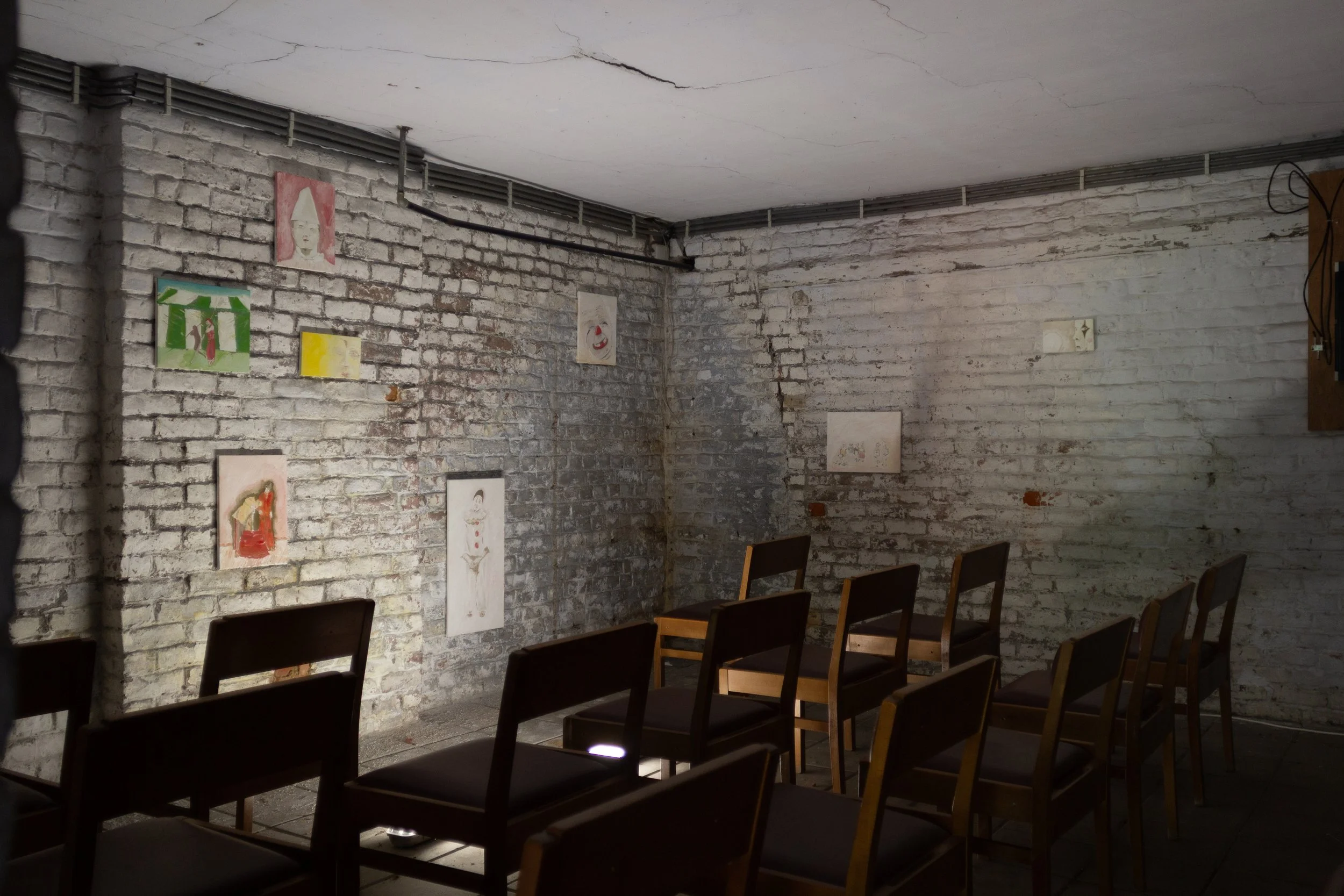
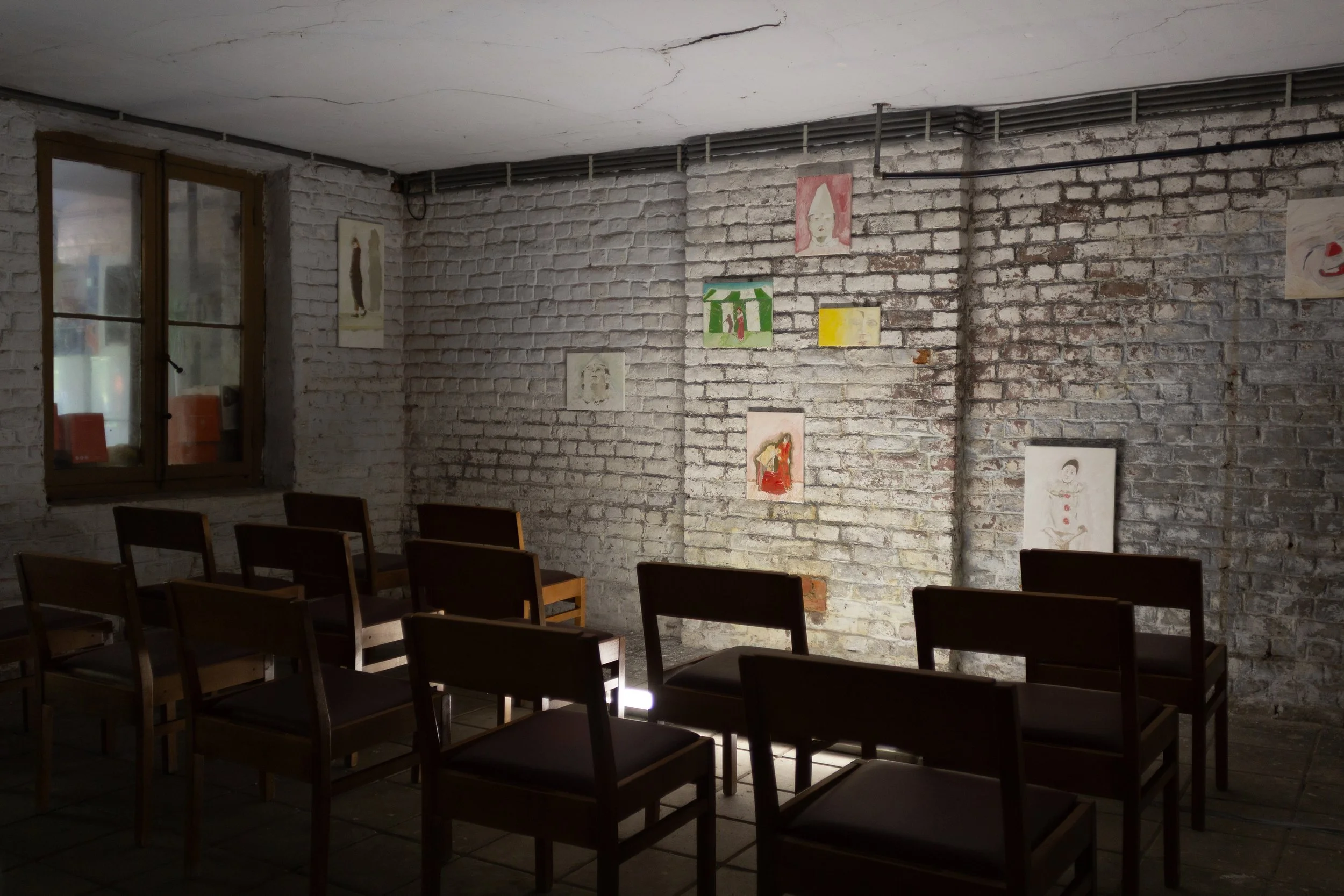
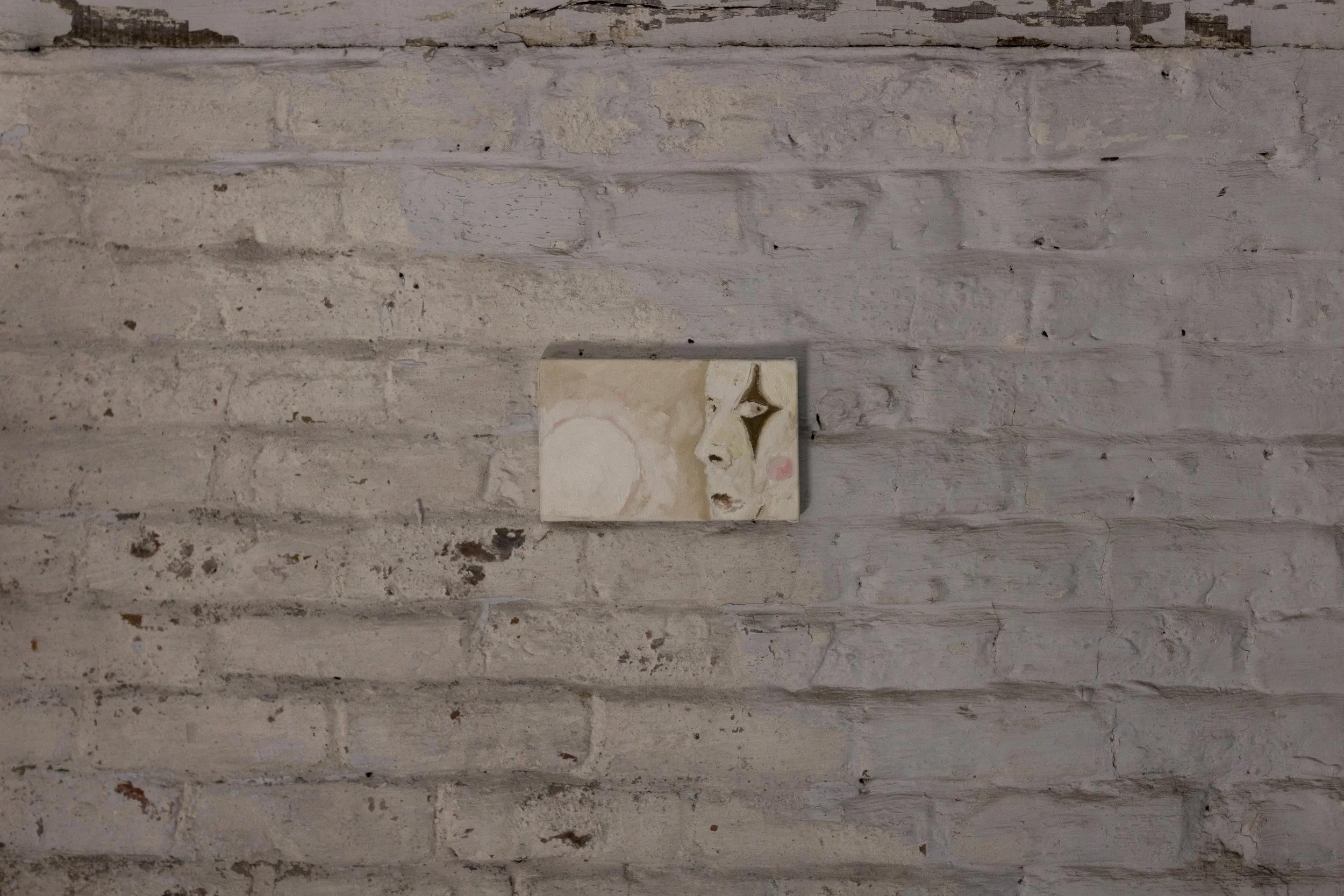
Oilpaint on canvas 22 × 13,5 cm 2026
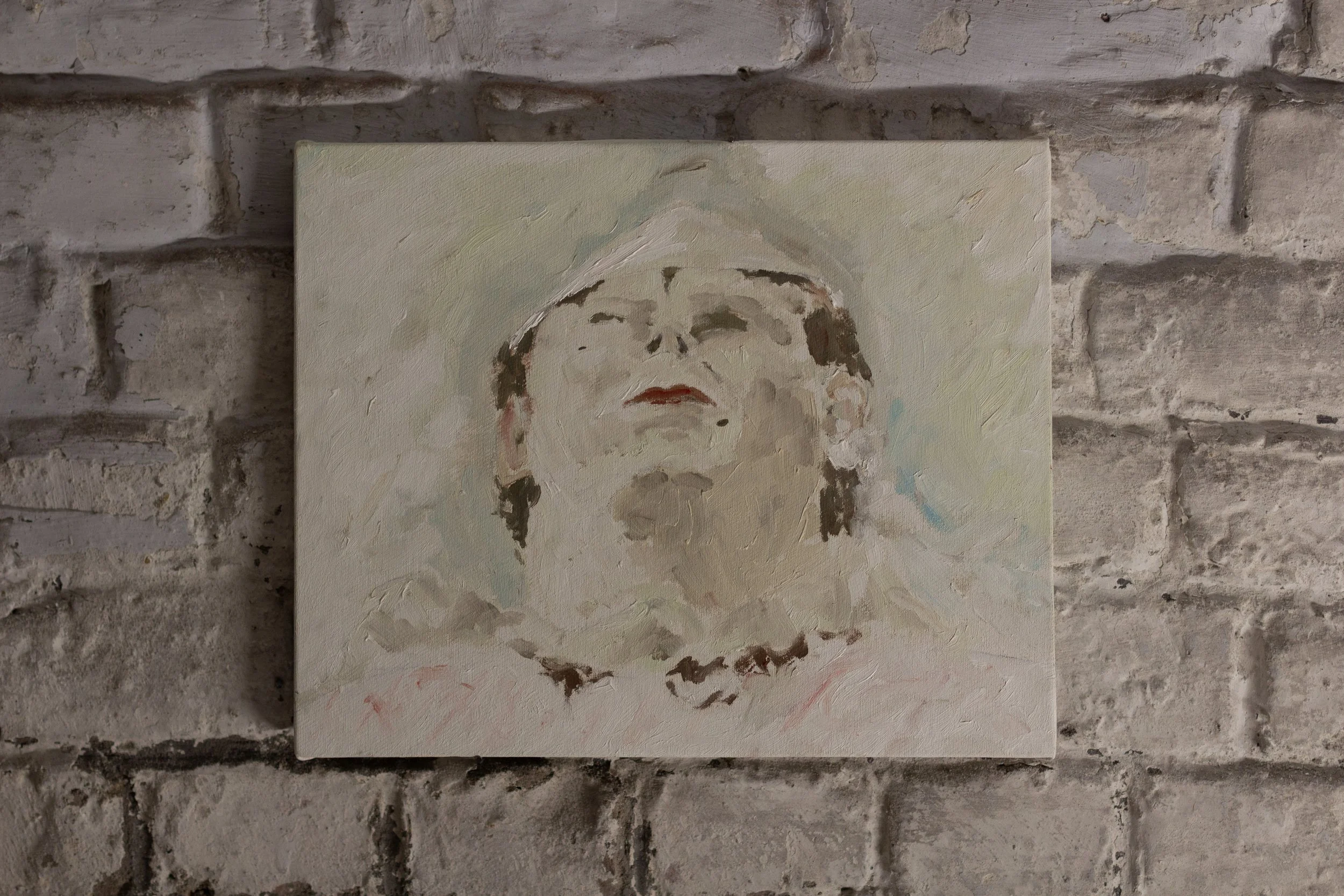
Oilpaint on canvas 34 × 27,5 cm 2026
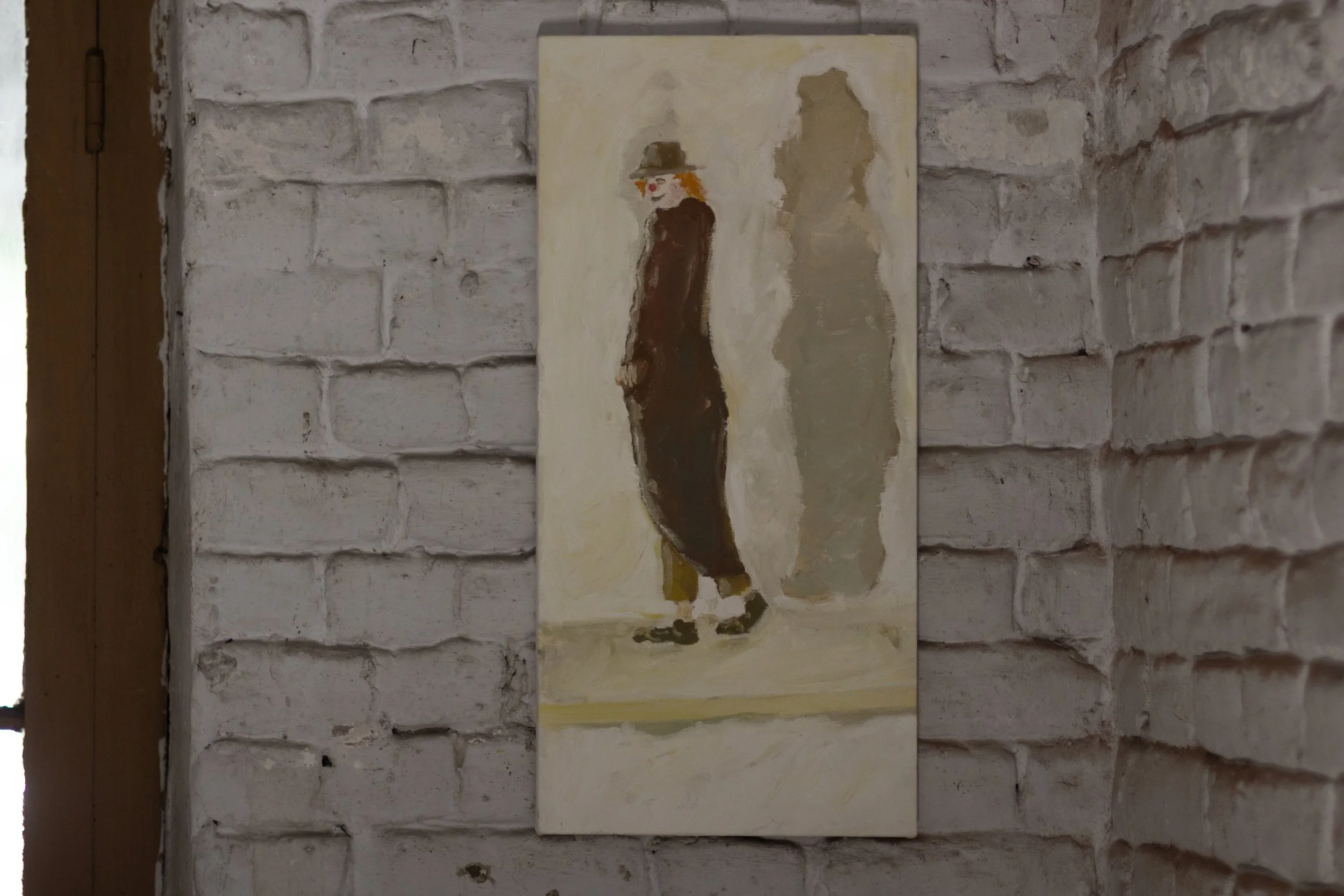
Oilpaint on canvas 30,5 × 64,5 cm 2026
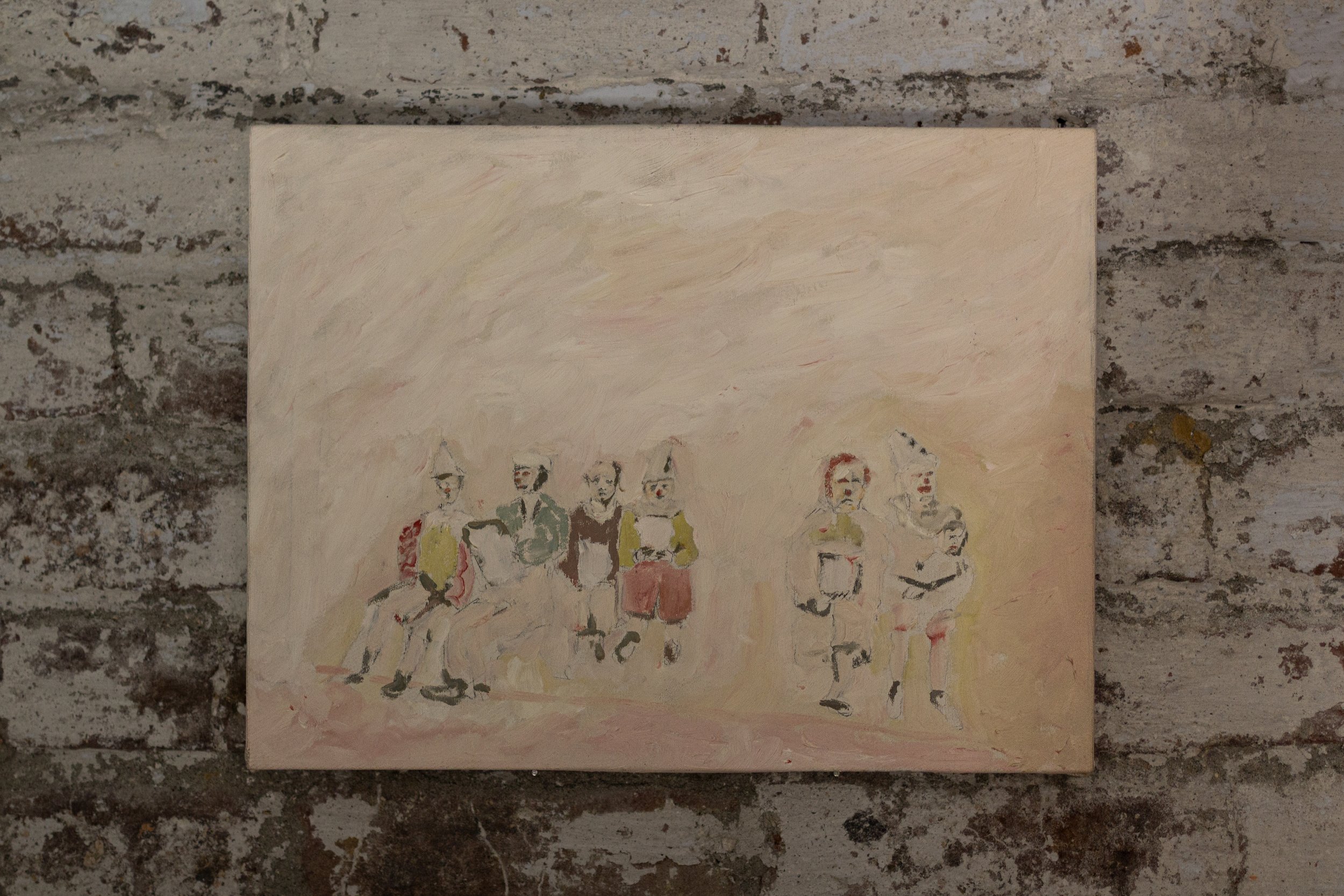
Oilpaint on canvas 38 × 29,5 cm 2026
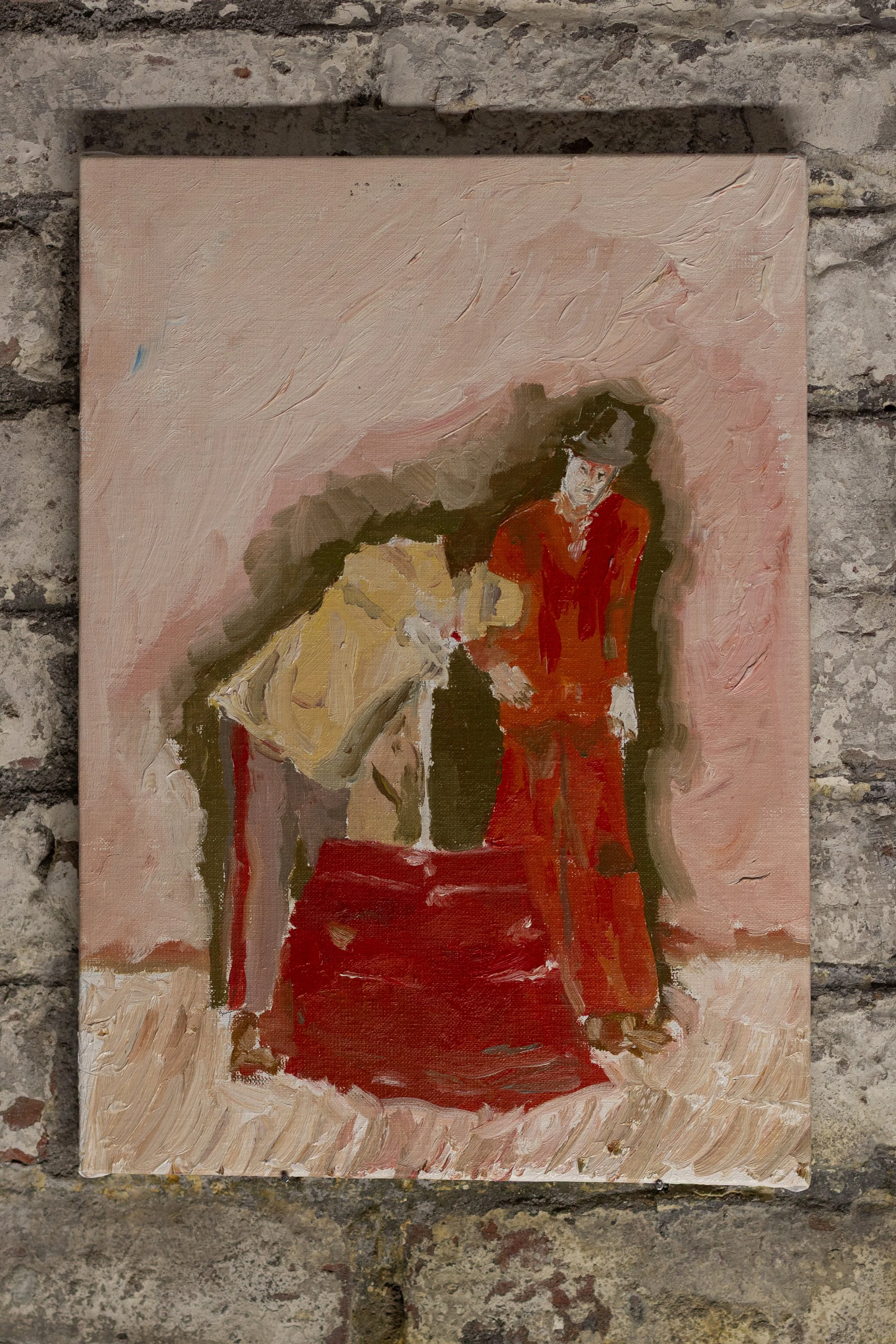
Oilpaint on canvas 38 × 27 cm 2026
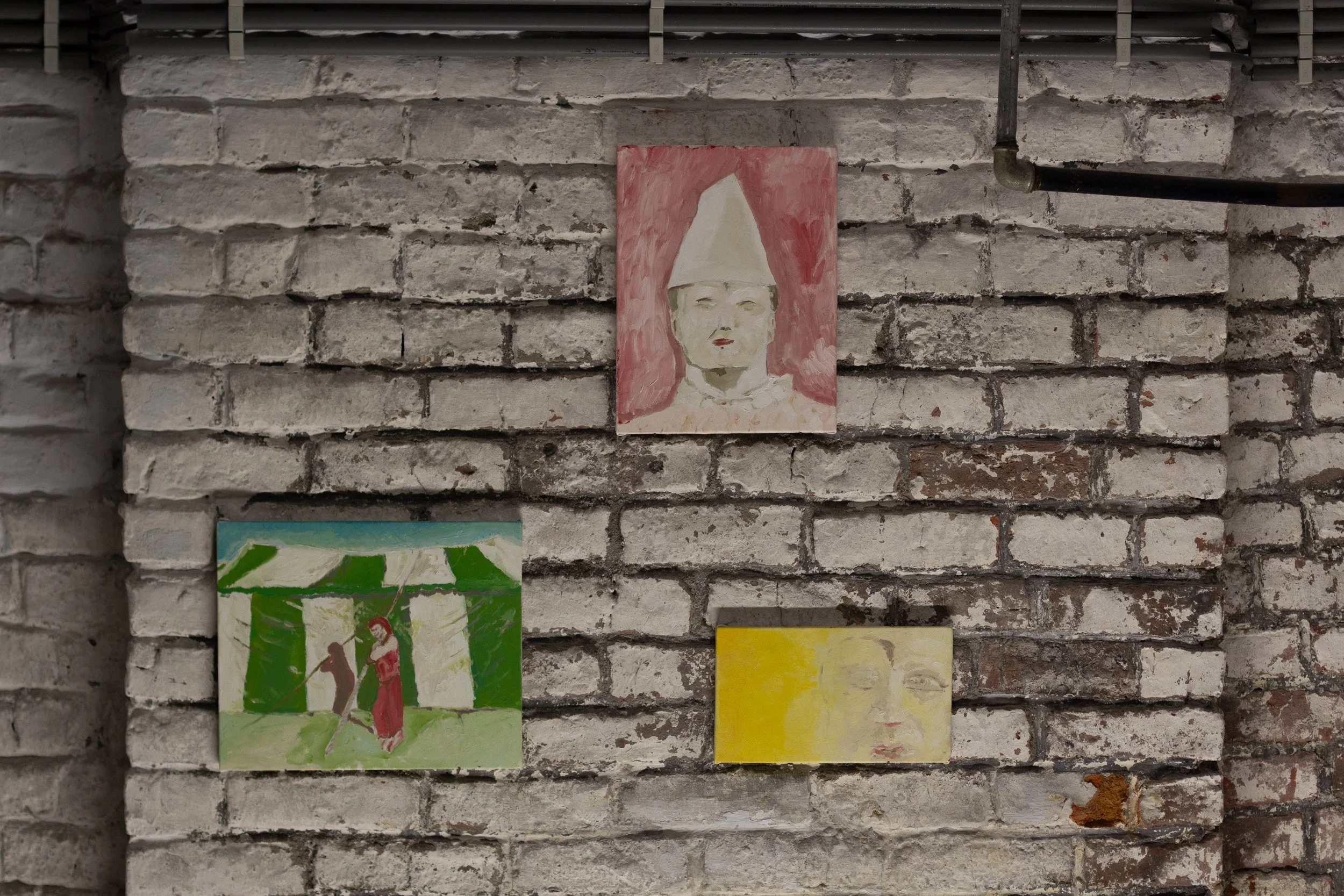
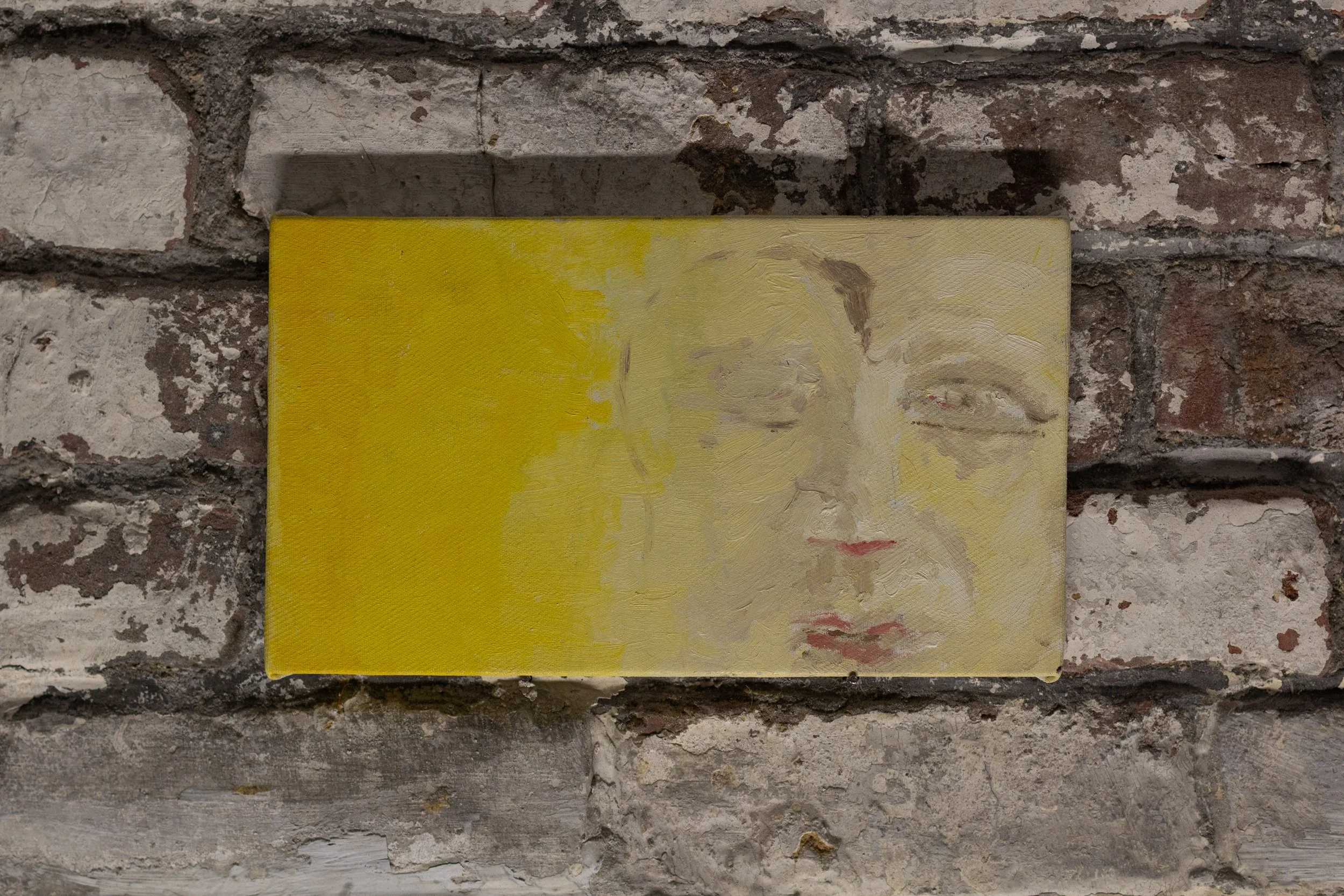
Oilpaint on canvas 29 × 34 cm 2026
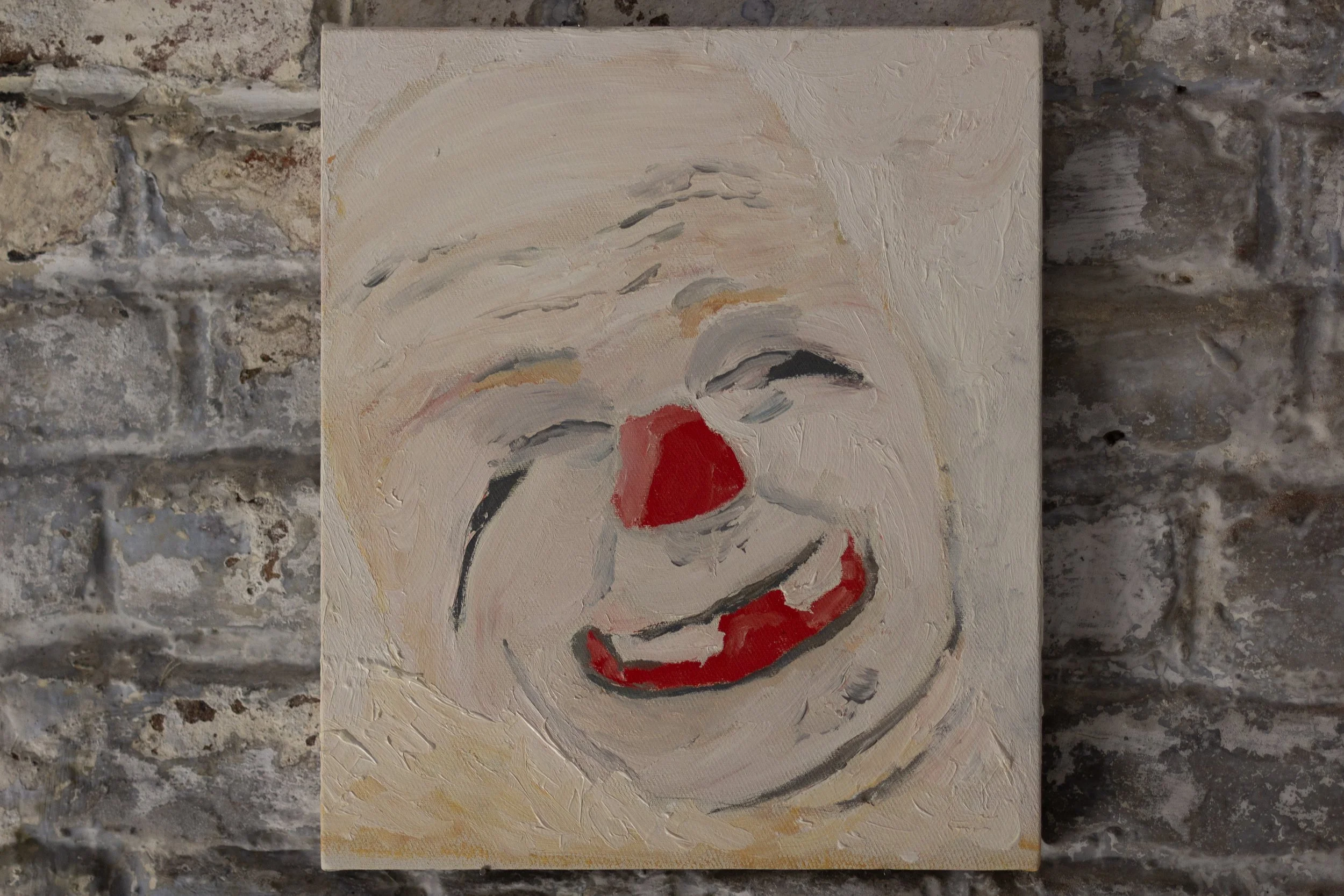
Oilpaint on canvas 29 × 34 cm 2026
photographs by Julien Jonas
Forsythia
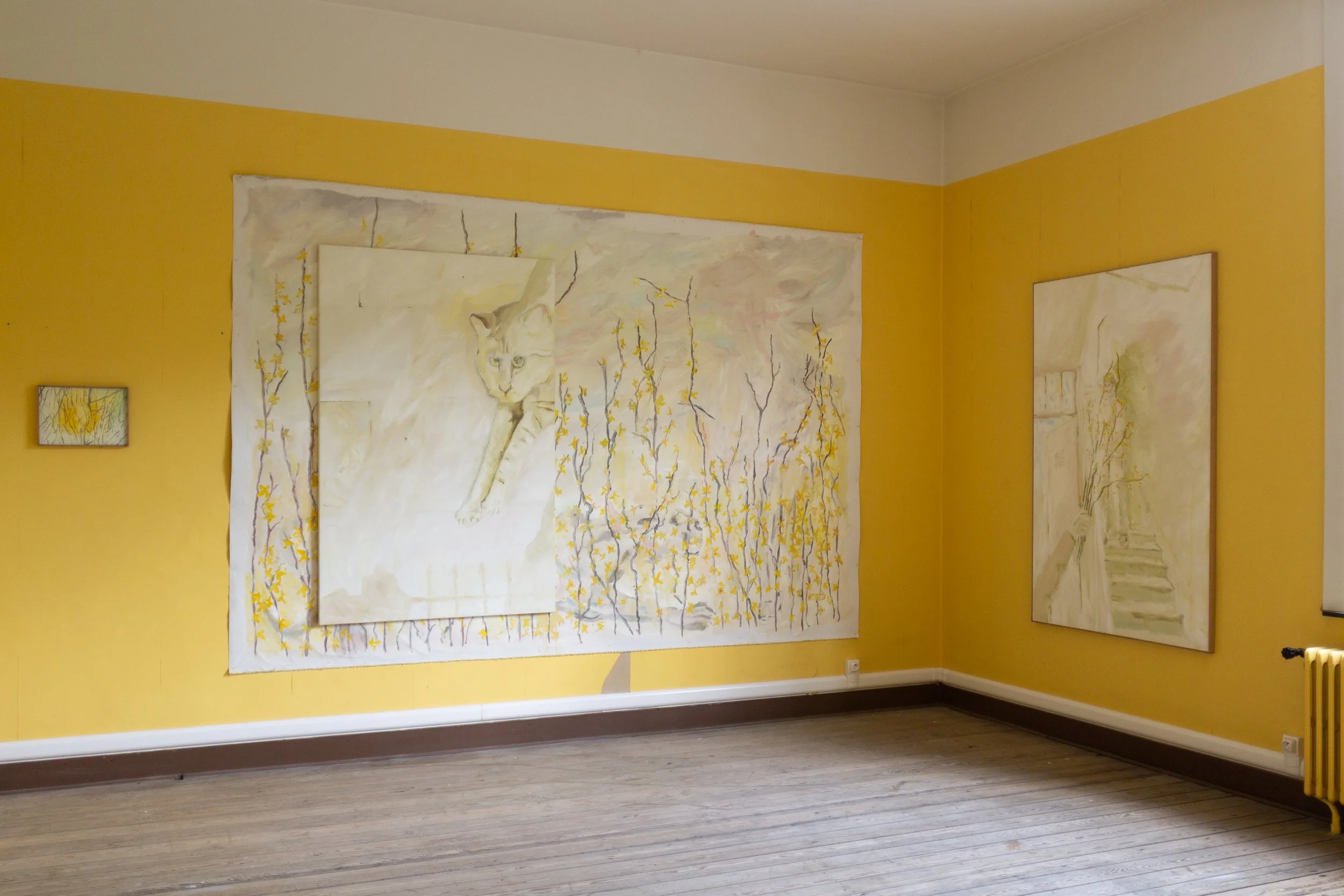
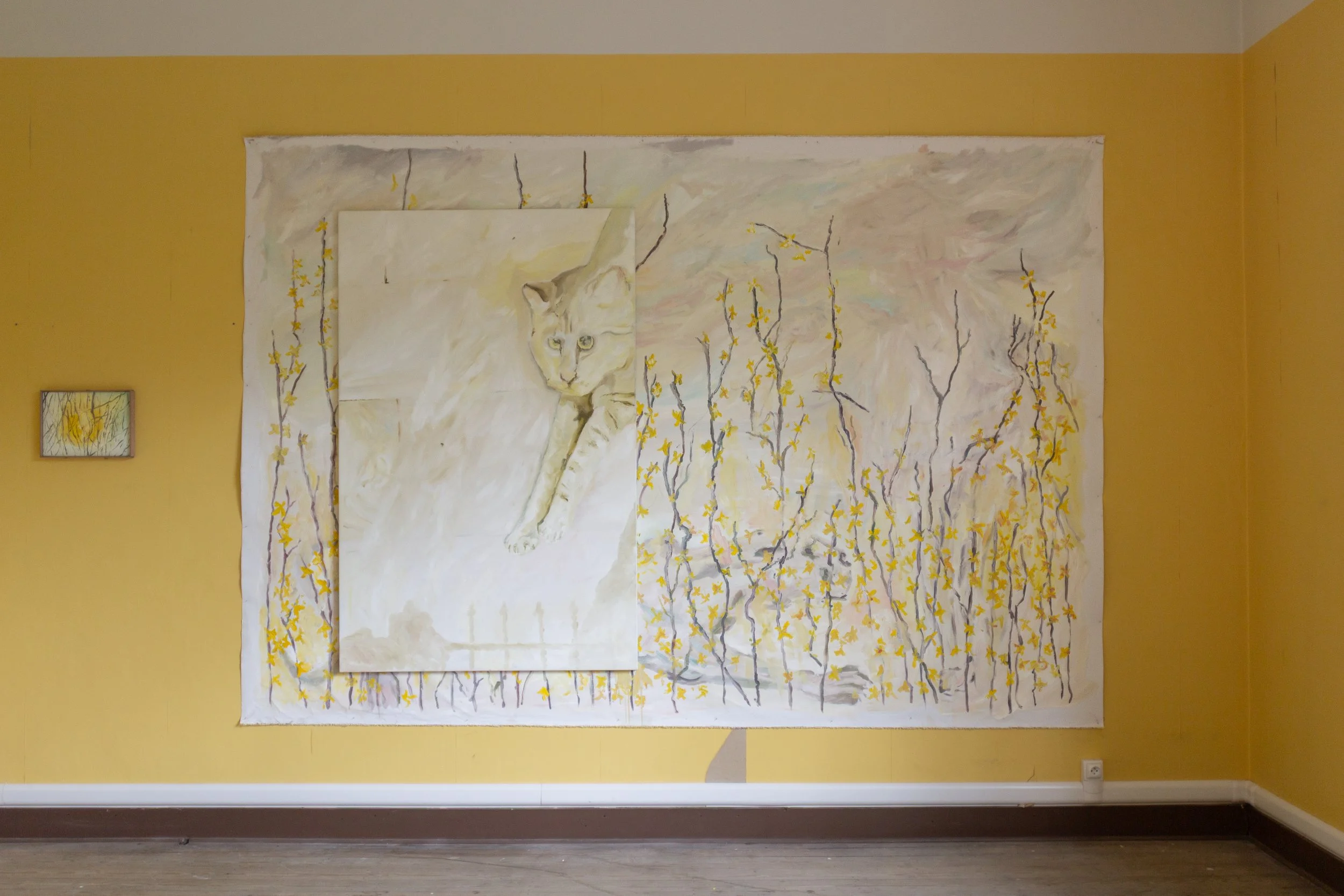
Oilpaint on canvas 300 × 200 cm / painting on painting oilpaint on canvas 110 x 170 cm 2025
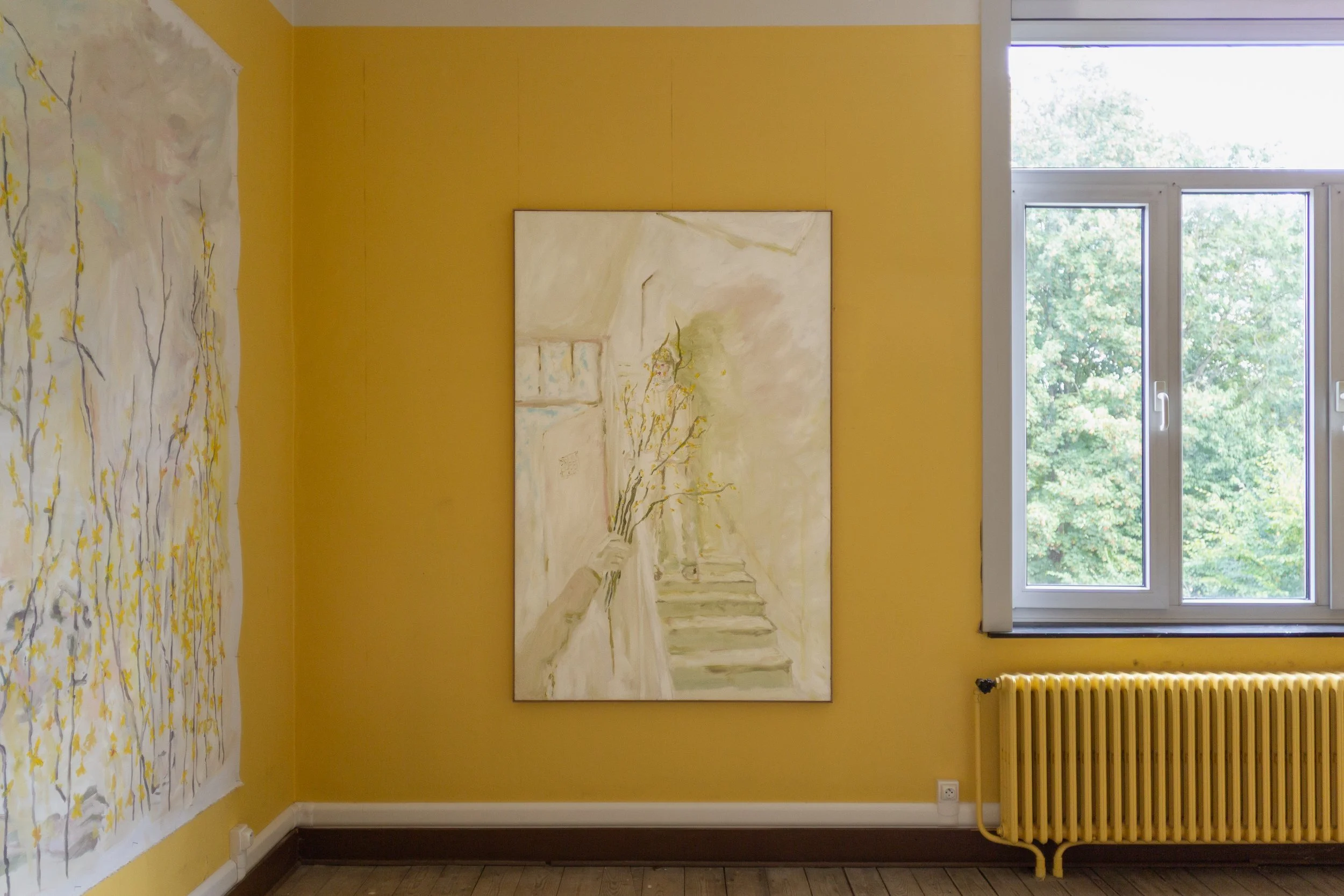
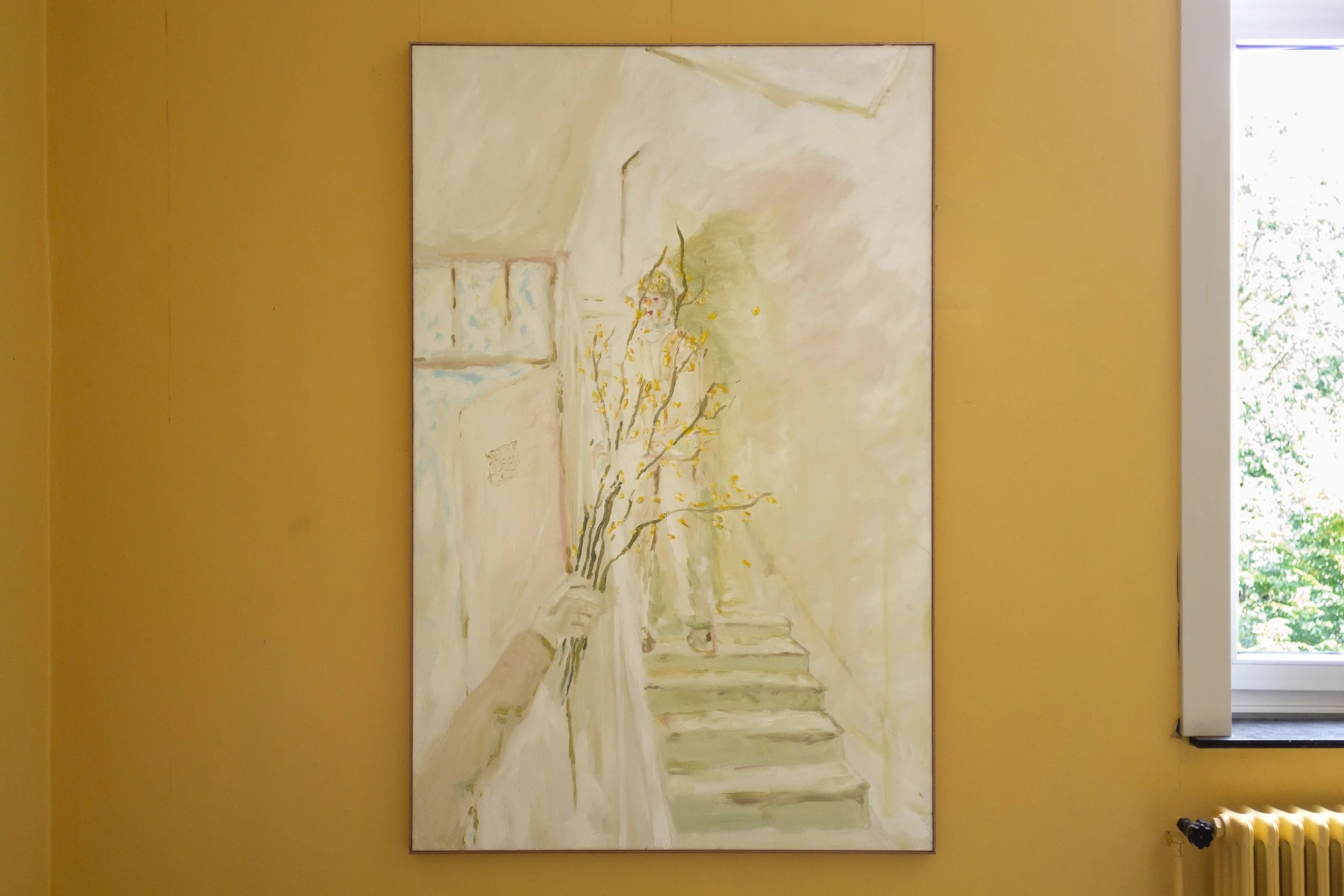
Oilpaint on canvas 110 x 170 cm 2025
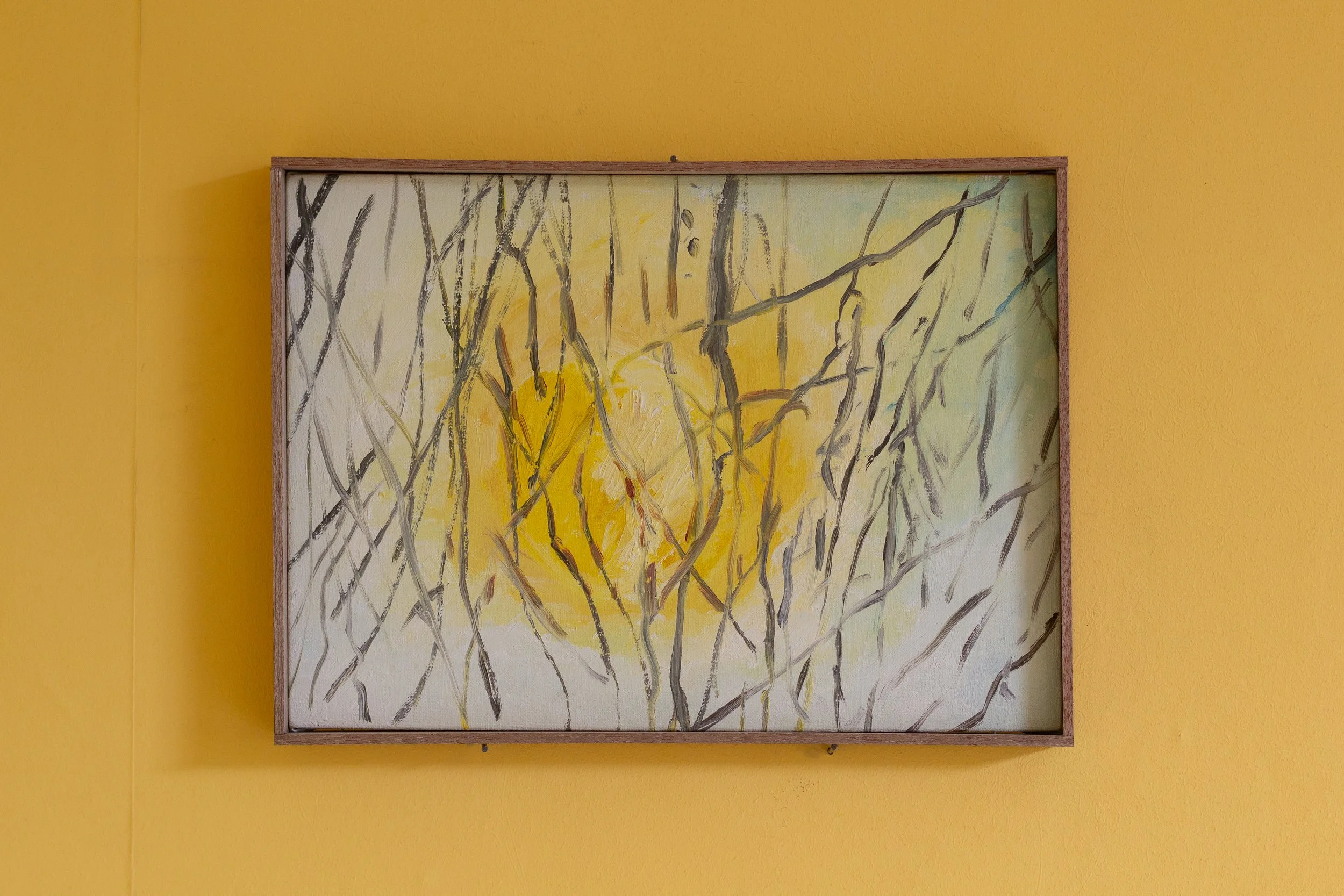
Oilpaint on canvas 34 × 25 cm 2025
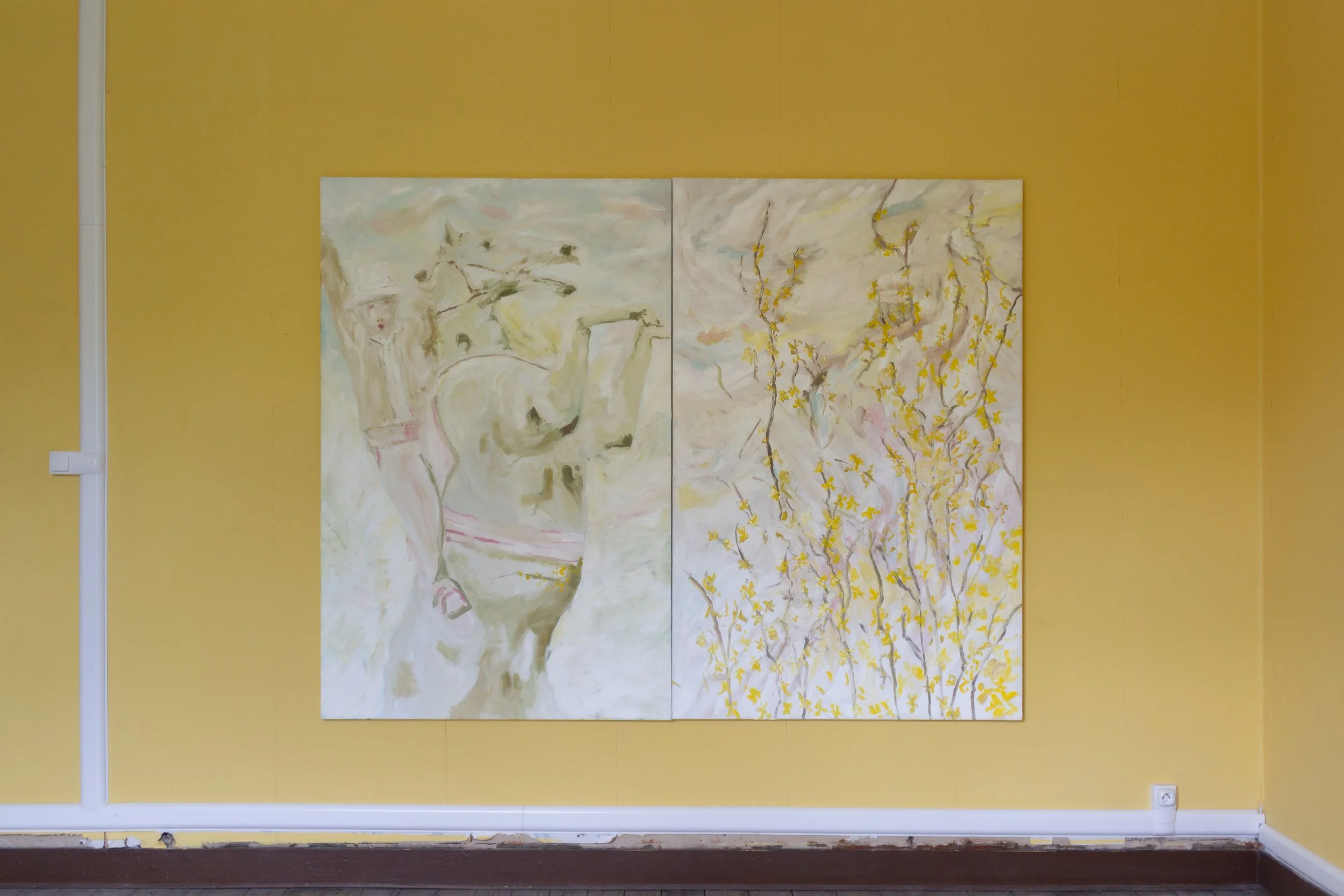
2 x oilpaint on canvas 110 x 170 cm 2025
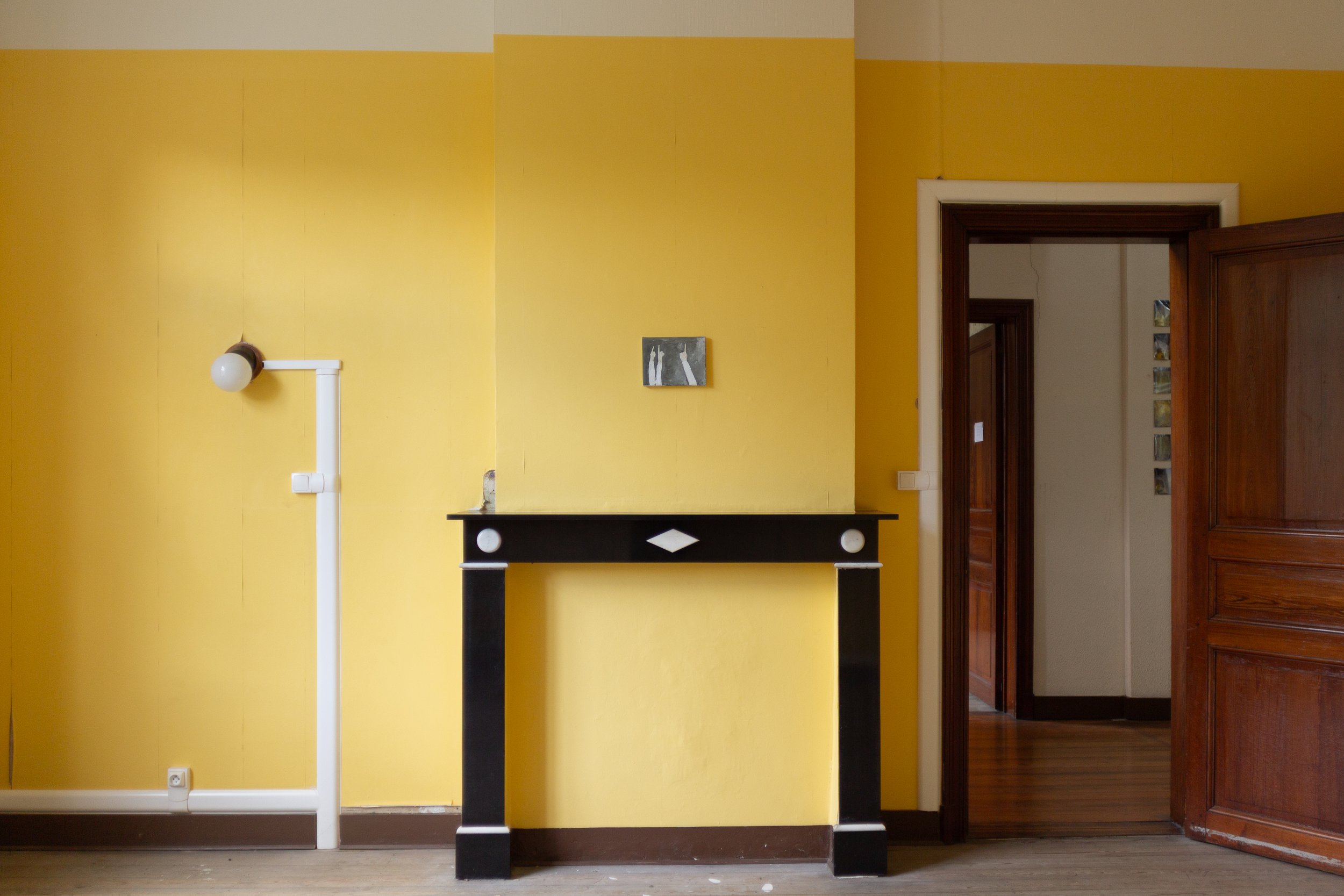
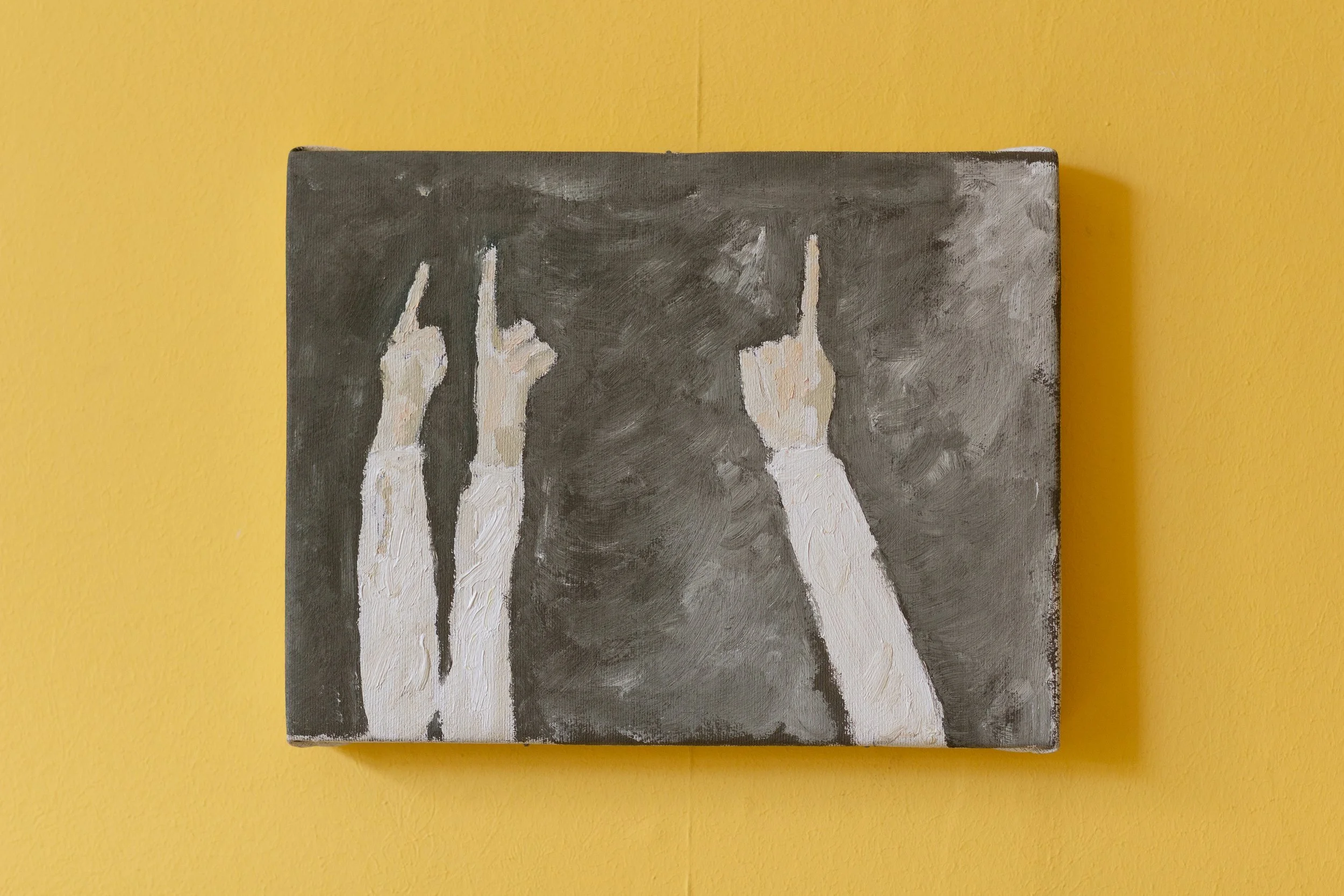
Oilpaint on canvas 22 x 17 cm 2026
photographs by Julien Jonas
Barbie and cowboys on canvas
Barbies and cowboys on canvas
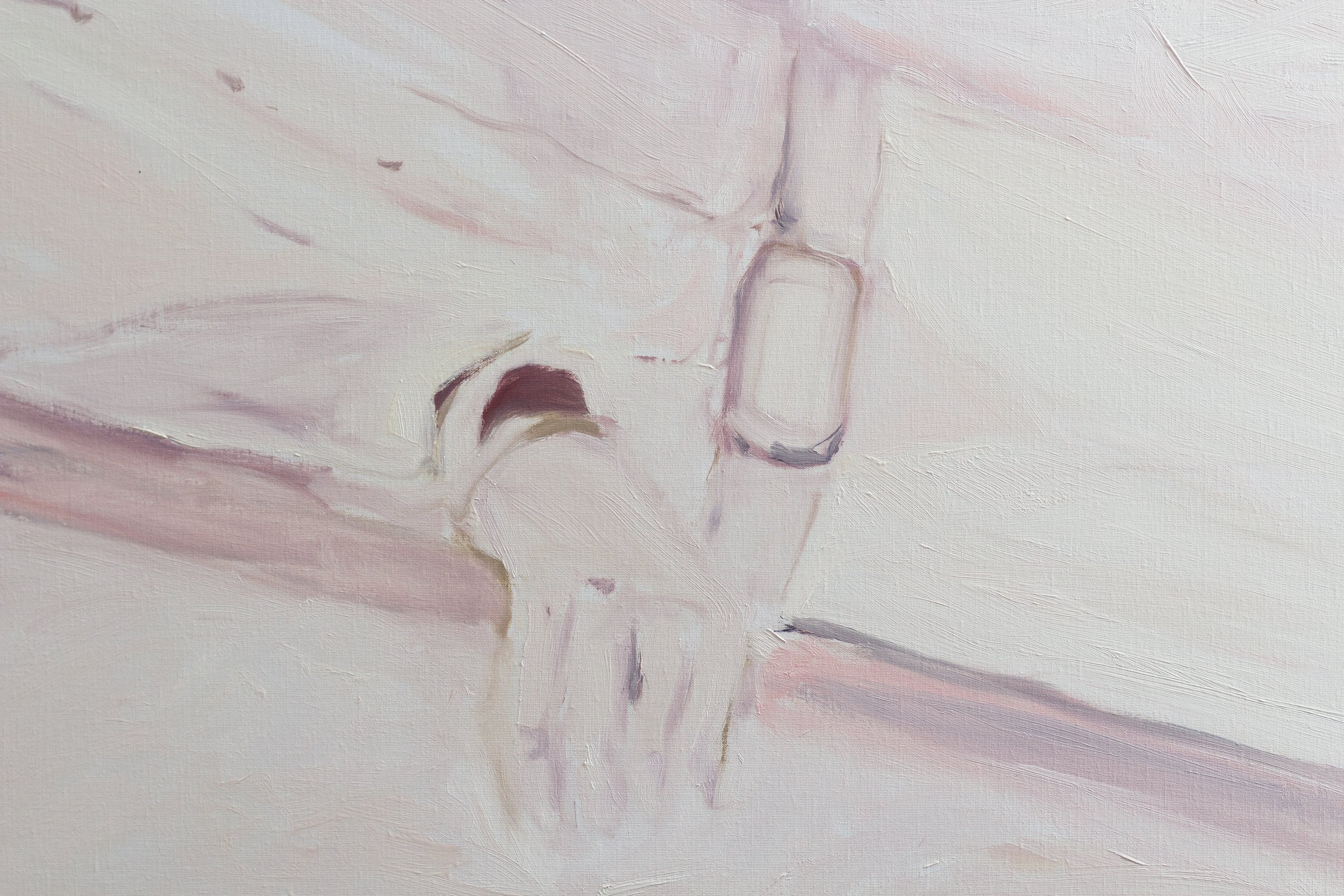
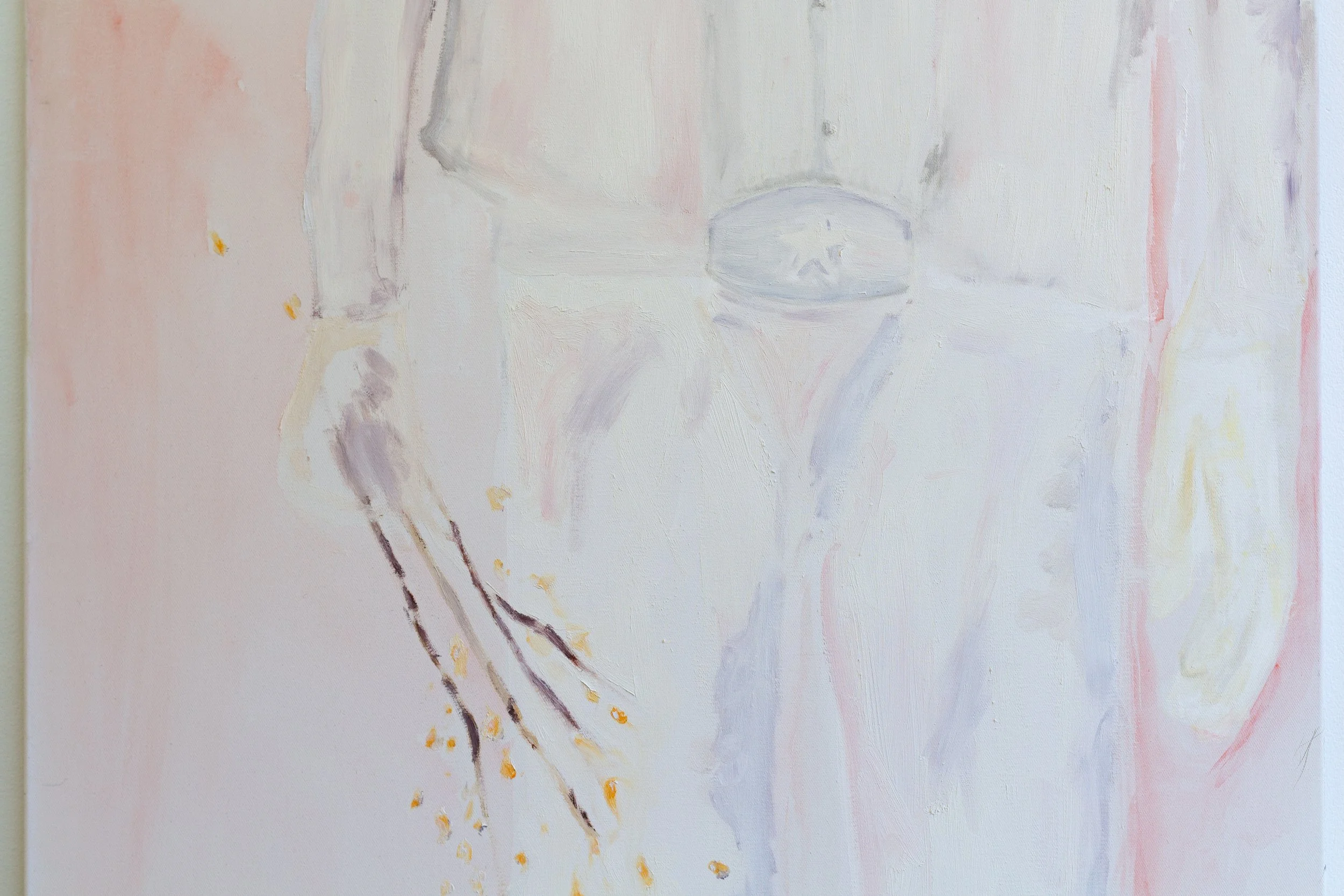
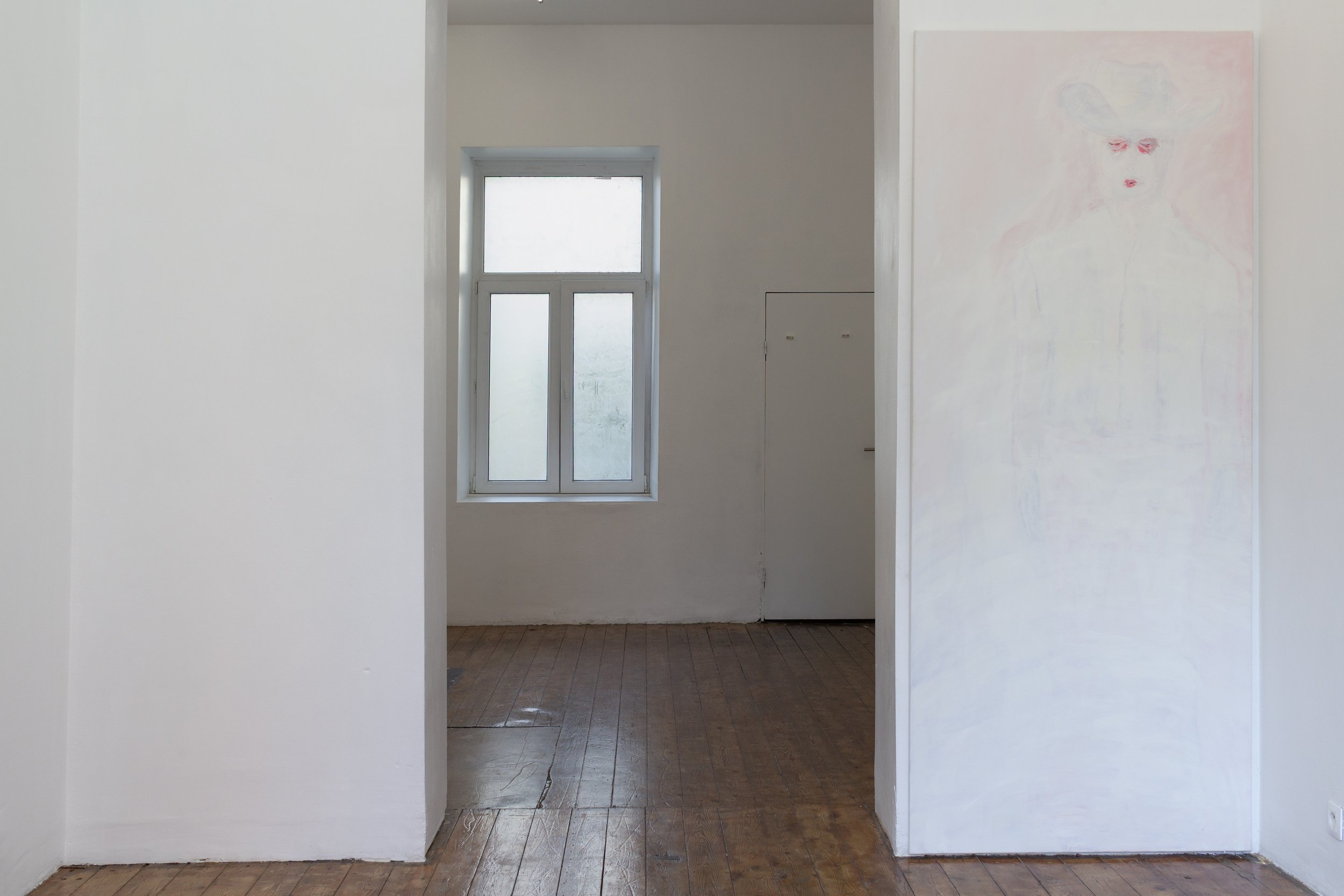
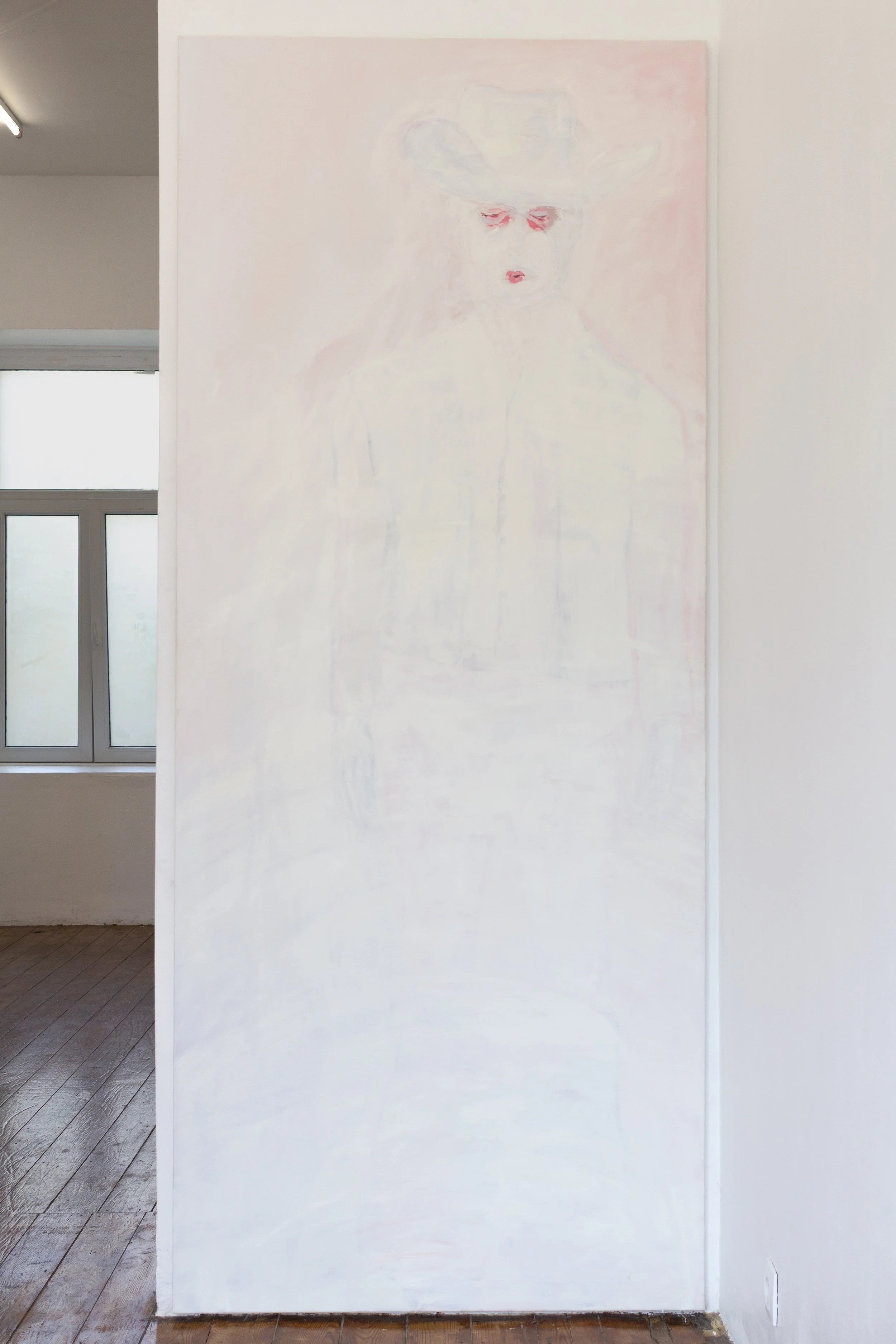
The cowboy, that persistent emblem of Western masculinity, chiseled from the attitude of few words, recklessness, and born to the back of a horse. In the popular imagination, he does not bend, and certainly does not break. And yet here, in shades of washed-out rose, grey, and white, the cowboy blurs and dissolves, nearly turning into a ghost. He hovers on the canvas as a remnant of a figure we have so eagerly tried to reshape in our collective vocabulary, a spectral cliché of masculinity that refuses to vanish completely.
My grandfather loved the old Western movies, highlights of Hollywood’s Golden Age. As a child growing up close to him, I was introduced to the world of the Wild West, the prairie, the vast lands where, from time to time, a tumbleweed rolls through the empty streets of wooden settlements, where they meet in the saloon to drink or to start a gunfight. The cowboy was always the hero, usually with a melancholy edge, a lonely figure. They moved with a stenciled ease in their uniforms: the hat, the boots, the tight-fitting trousers. I remember how strange this world felt to me – these men and their attitudes, over-articulated in almost symbolic orders of poses. Observe one, and you knew them all. Even though my grandfather would sometimes laugh heartily, I found little to laugh about.
Only recently did I watch Brokeback Mountain, twenty years after its great success. A classic. Perhaps the film, quietly archived in the back of cultural memory, was always filed for me under a rubric: the unraveling of the cowboy myth, the deconstruction of gender norms. Heath Ledger and Jake Gyllenhaal, not without stepping into other clichés (the same as this text might do), manifested the image of the tragically gay love story, foregrounding the brutality of society’s norms. Sobbing boys, fighting their desires and themselves, breaking through concrete walls of suppressed emotions and the inability to speak, act, and be as they feel. It is only the first version of the many new embodiments this archetype has undergone ever since.
The ideals of Western culture (historically questionable not only because of the role models they postulate) became infantilised figures, characters we can slip into like costumes, or deny altogether. The cowboy, red-eyed and wasted, seems exhausted by his role. Tired of being what the world expects him to be, he might whisper: Let’s leave it behind. Let’s leave this stage. Let’s disappear. Thus, are we witnessing the transformation of a heroic archetype into its tragicomic dissolution, or into a moment of humanization (the two are not mutually exclusive)?
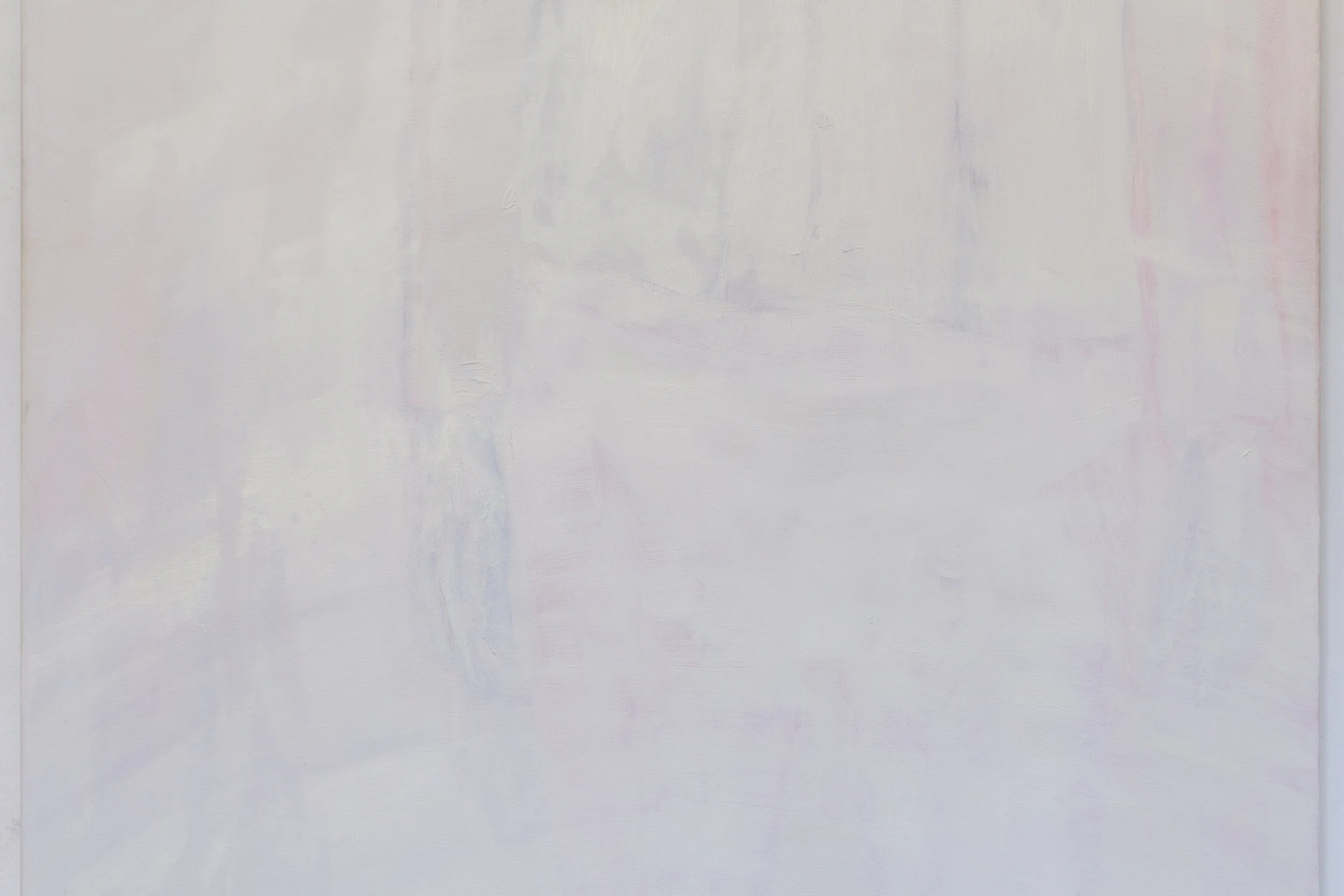
An archetype is a blueprint, a primal image or symbol that surfaces across countless forms of representation. Archetypal figures inscribe themselves into our collective consciousness. Carried across generations, they appear as myths and literary motifs, as well as stereotypes and everyday clichés. Here they are painted as though they were wax figures: stiff, tall, doll-like. Do they invite us to identify with them? Perhaps not. They seem to refuse that moment and yet their exposed fragility, their hollowness, their ghostliness leave us in a liminal space of negotiation.
Barbies and cowboys on canvas, they are slowly colliding. Is it parody or confession, critique or self-examination? Is the gesture one of mockery, or of tenderness? Perhaps it is an attempt to deconstruct, to re-stage, to ask again what it means to inhabit these forms that both shaped us and continue to haunt us.
Text by Sophie Fitze
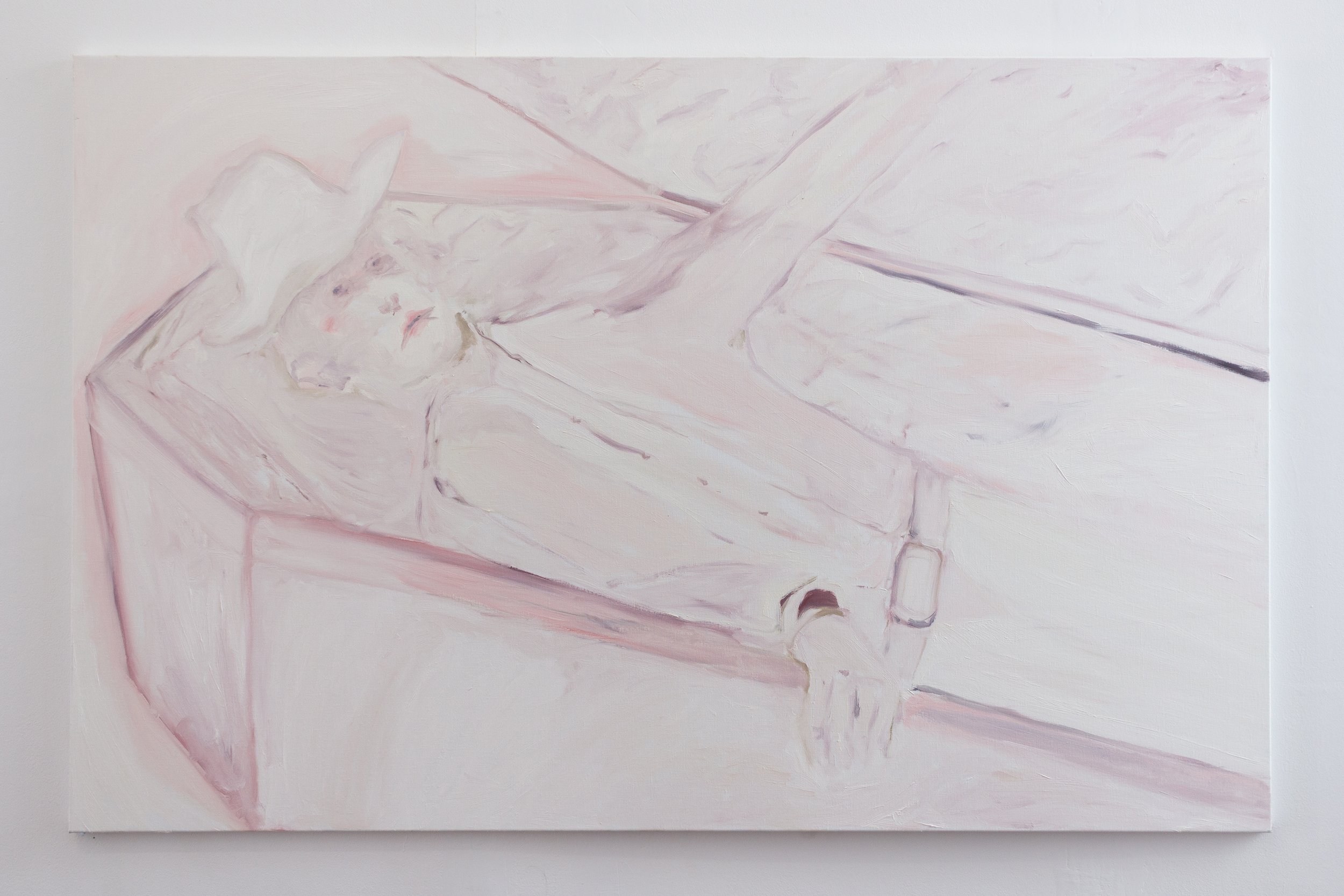
Oilpaint on canvas 170 x 110 cm
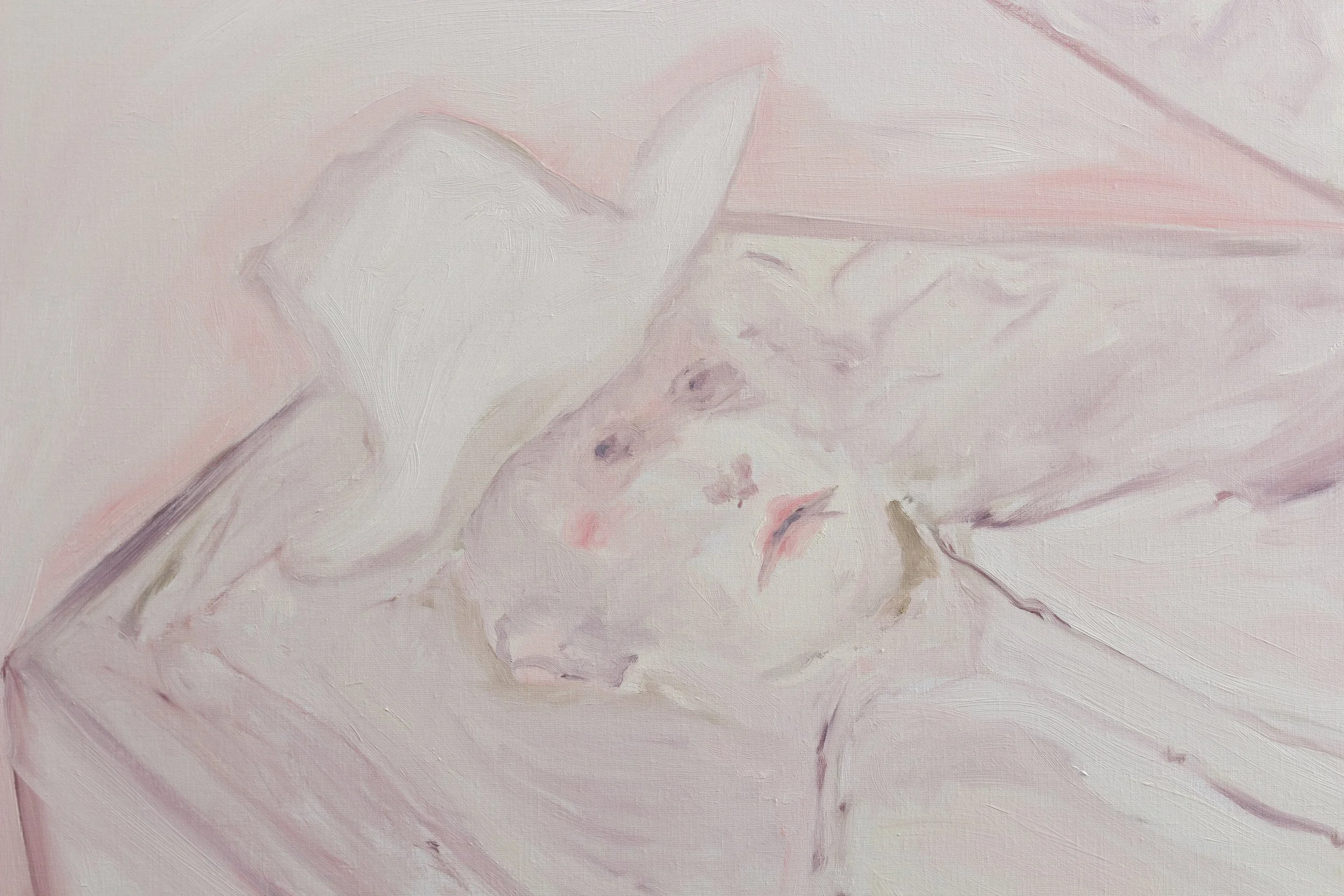
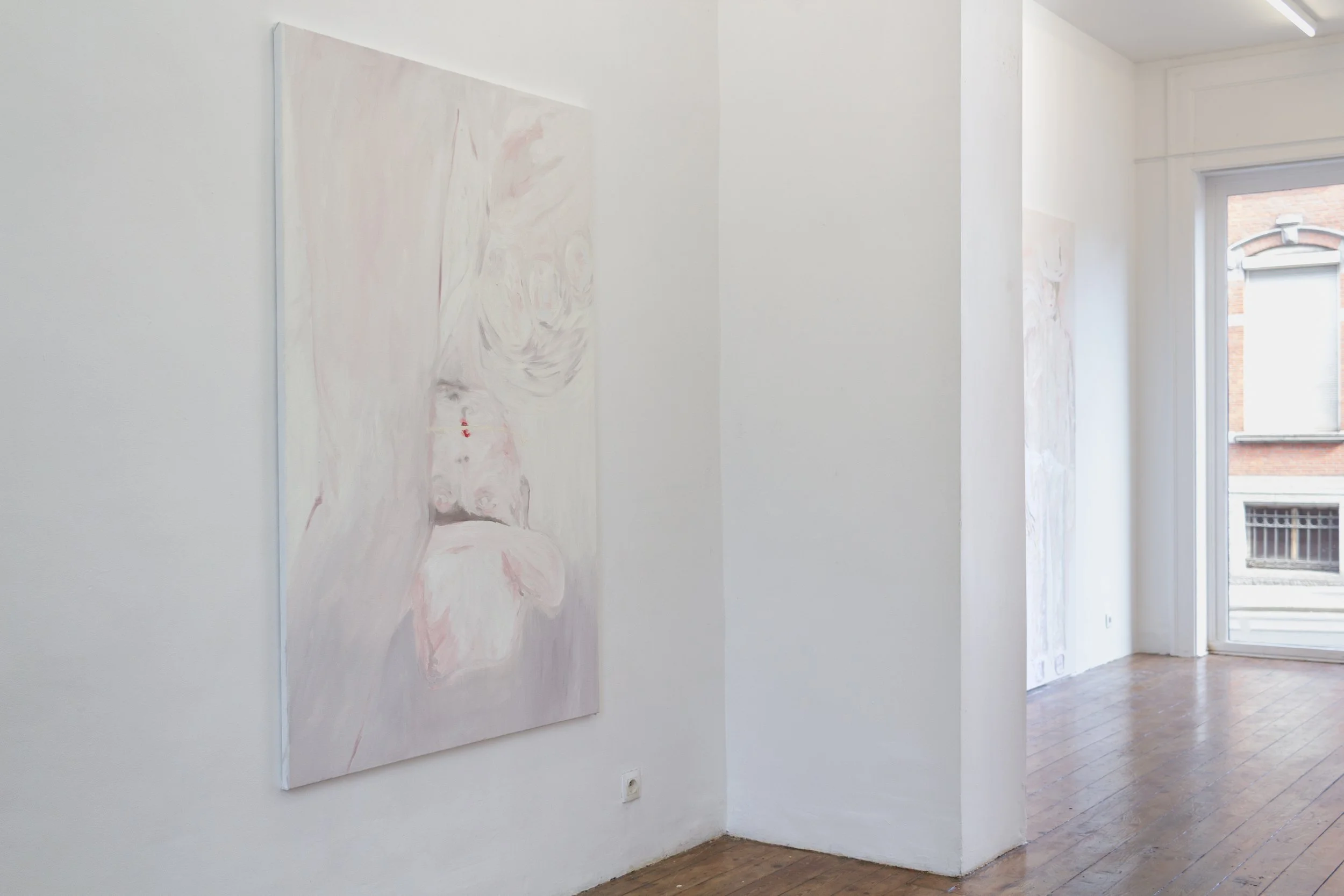
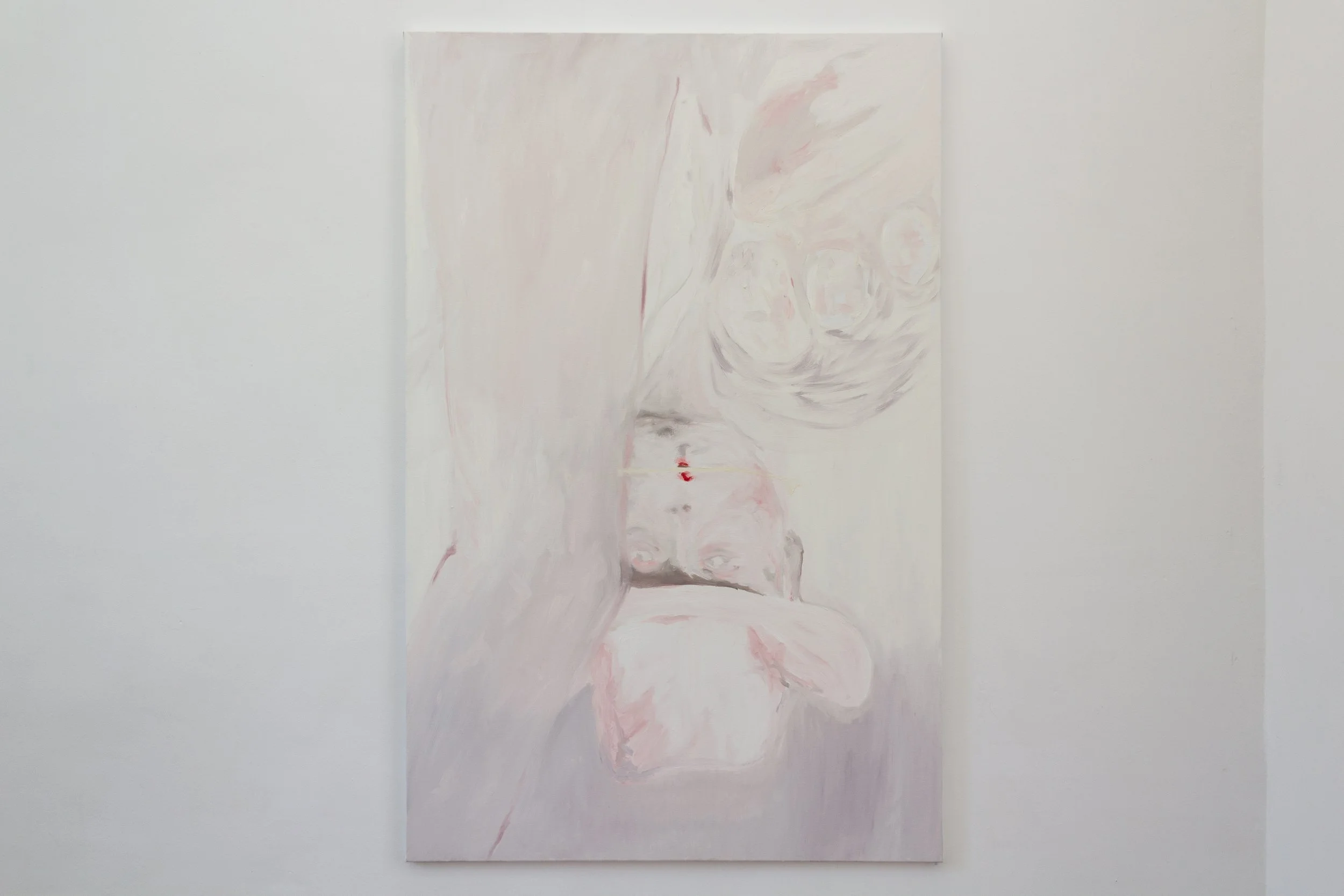
Oilpaint on canvas 110 x 170 cm

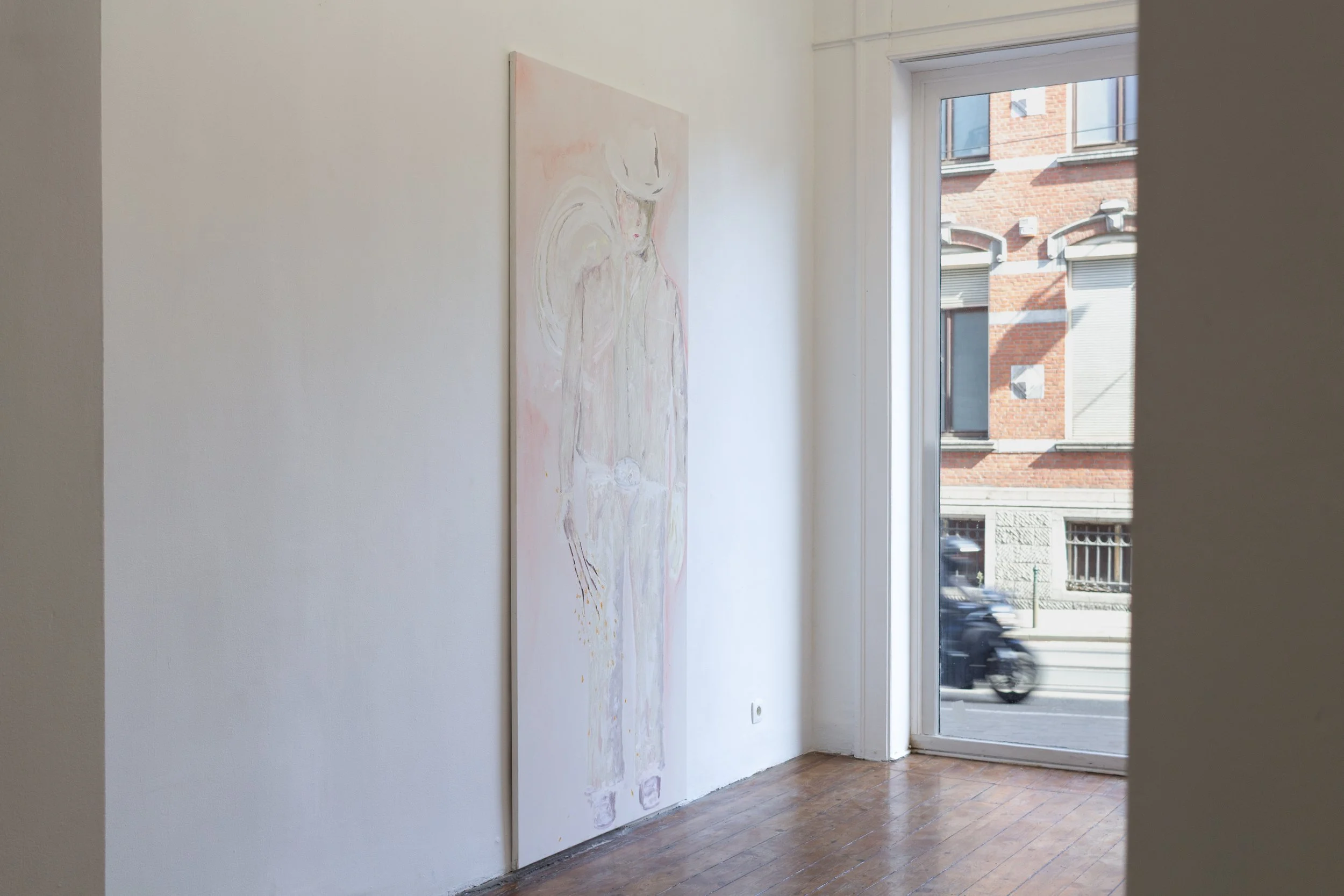
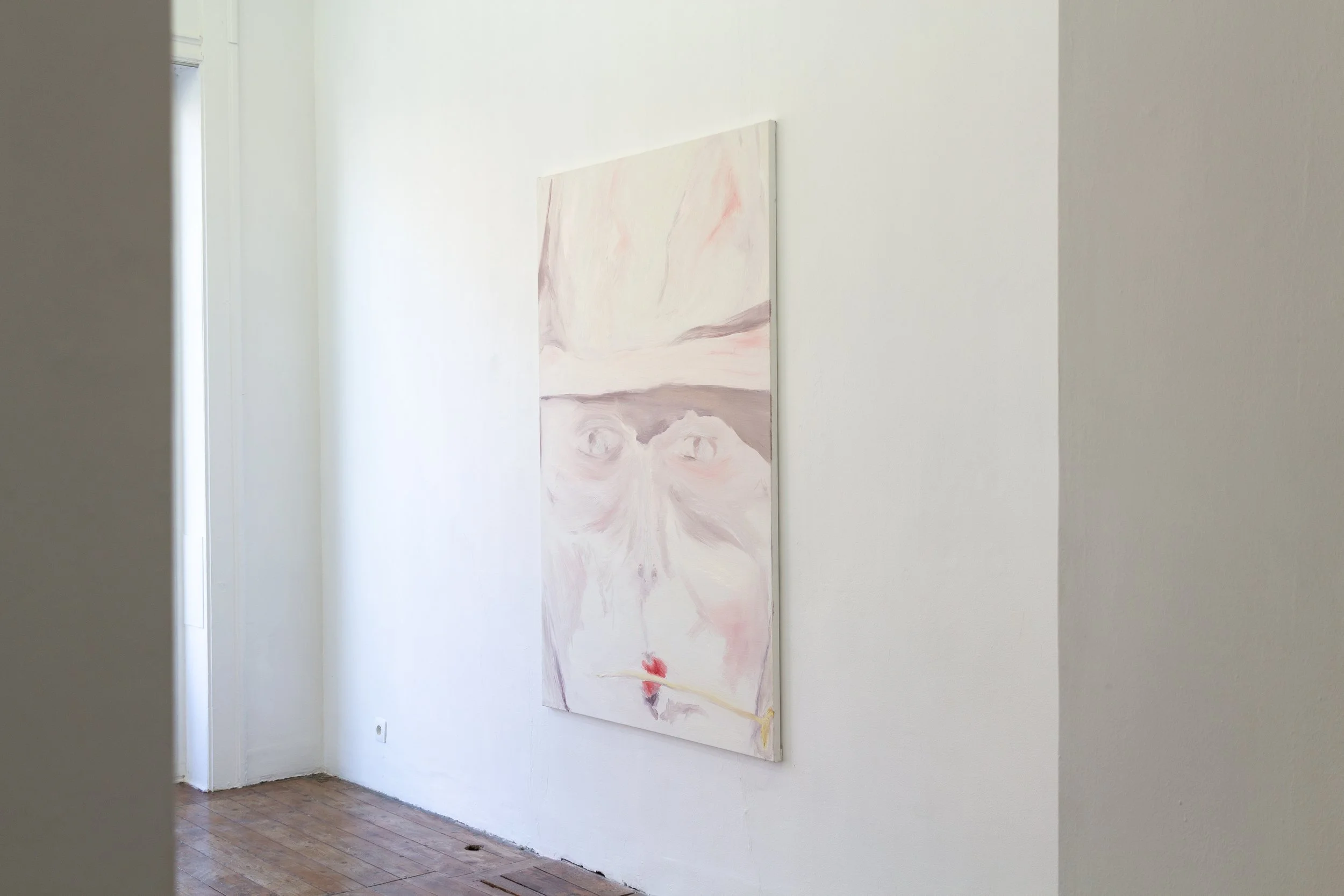
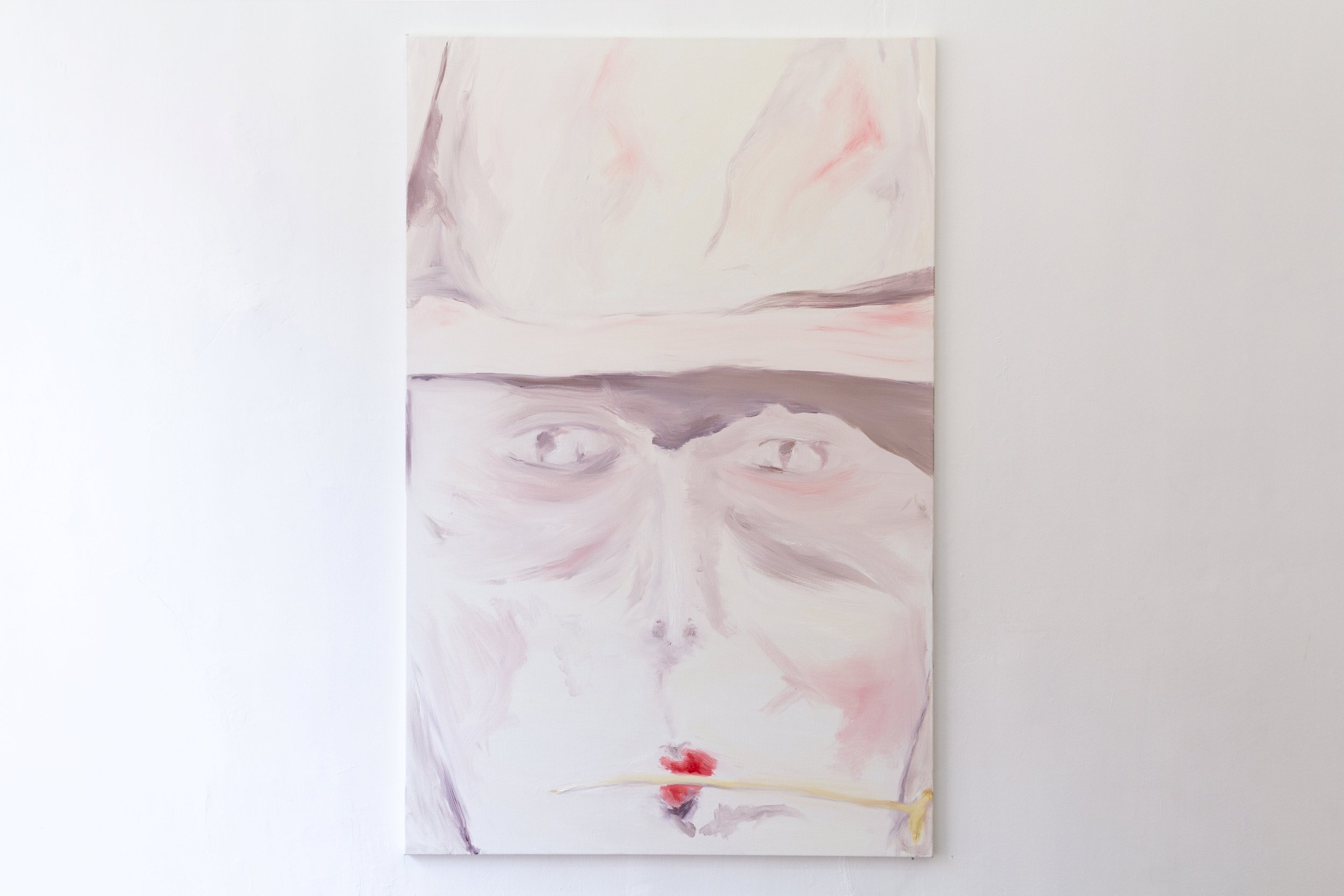
Oilpaint on canvas 110 x 170 cm
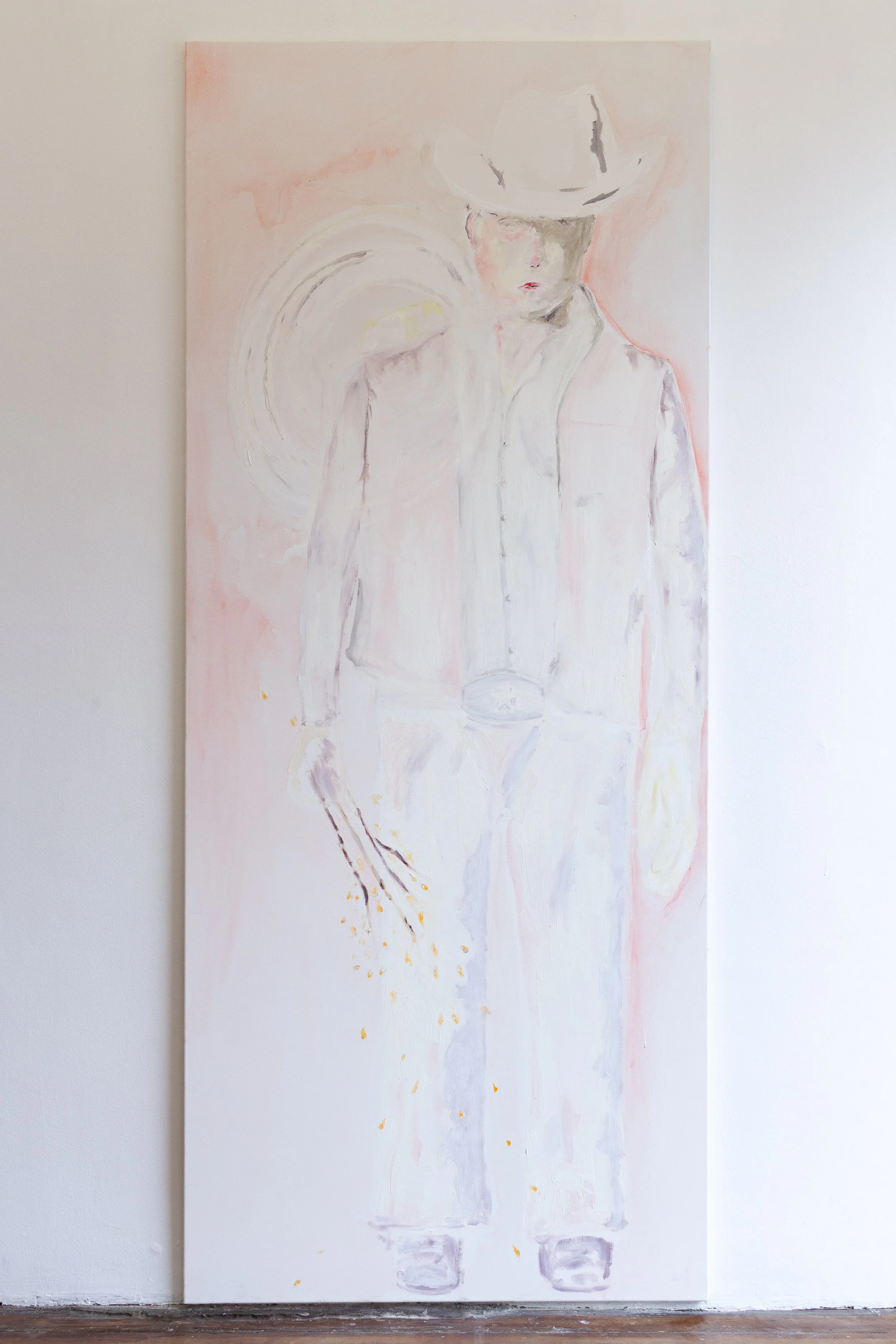
Oilpaint and aquarelle on canvas 100 x 240 cm
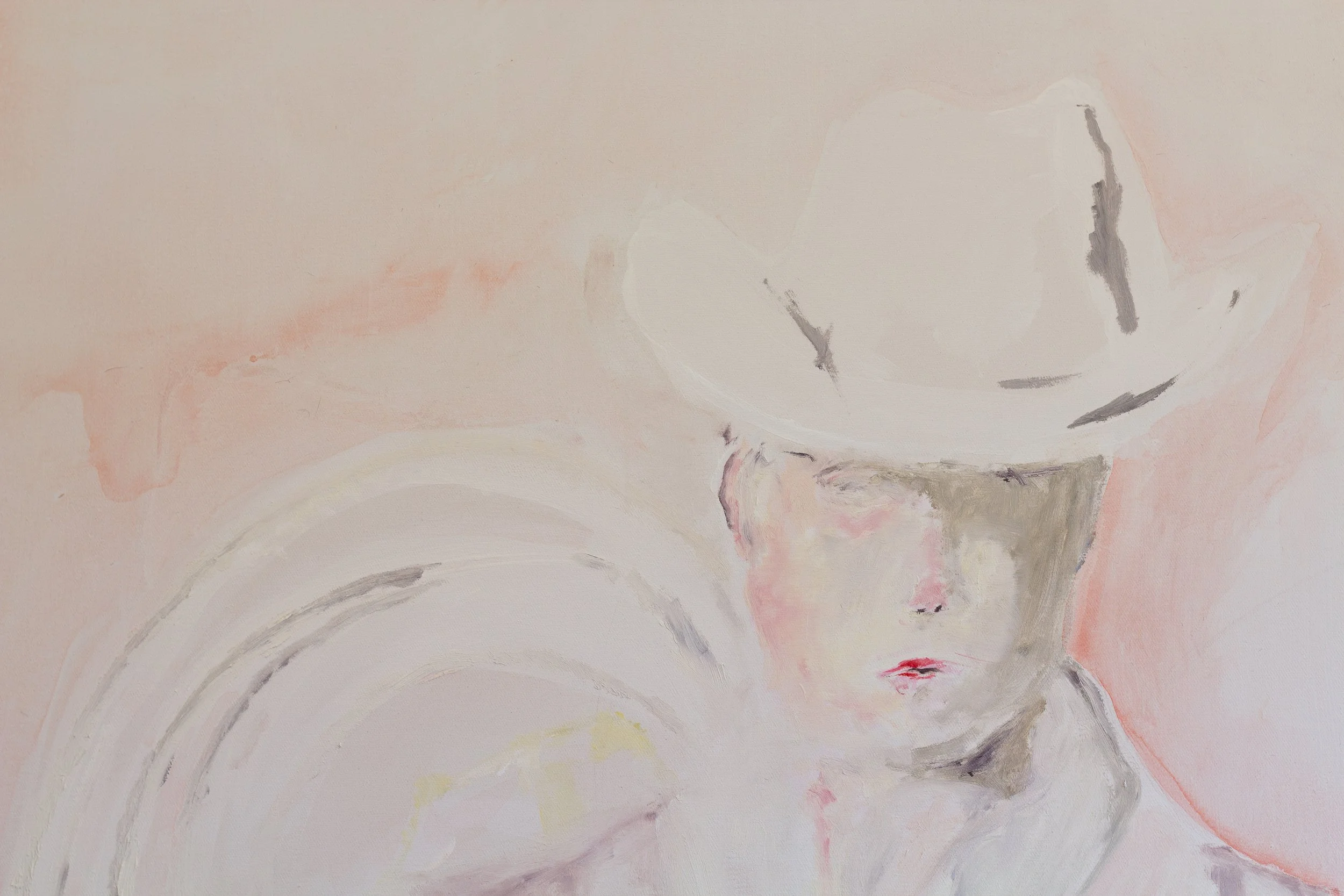
oilpaint on canvas 100 x 240 cm

photographs by Julien Jonas